

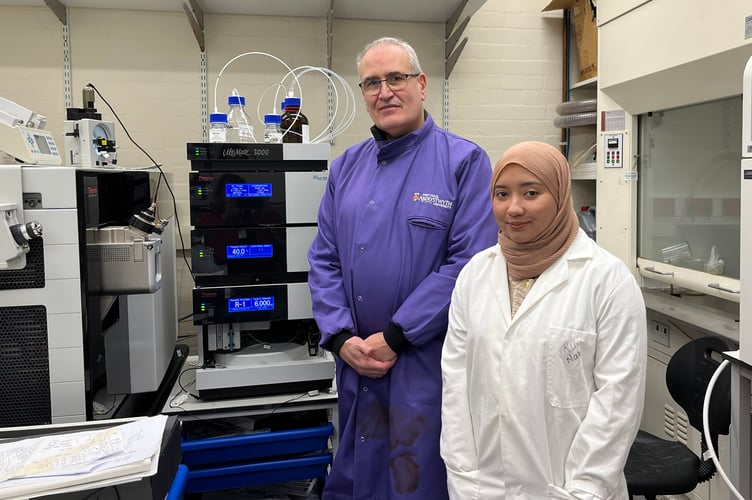
A simple, non-invasive home test kit could soon transform early breast cancer detection, thanks to pioneering research underway at Aberystwyth University.
Scientists at the university are developing a prototype lateral flow device - similar to a pregnancy or COVID 19 test - that can detect early biochemical signs of breast cancer from a single urine sample.
If successful, the test could support faster diagnosis, reduce reliance on invasive procedures, and improve outcomes for thousands of women.
Breast cancer remains the most commonly diagnosed cancer among women globally and continues to be the leading cause of cancer-related deaths in more than 100 countries around the world.




While mammography, MRI scans and biopsies play a crucial role in diagnosis, there is growing demand for simpler, more accessible tools that can detect the disease at its earliest and most treatable stages.
A new clinical research programme at Aberystwyth University is addressing this need by identifying metabolic changes linked to breast cancer that are excreted in urine, enabling earlier and less invasive detection.
Professor Luis Mur from Aberystwyth University, who is leading the research, said: “Our work is revealing a distinct biochemical ‘signature’ associated with the earliest stages of breast cancer—one that can be detected in a simple urine sample.
“By translating these findings into a lateral flow test, we hope to create a diagnostic tool that is affordable, easy to use at home, and capable of detecting cancer earlier than many current methods.
“Early diagnosis saves lives, and our aim is to make that crucial first step accessible to as many women as possible.”
Professor Mur, and the breast cancer study manager, Dr Aimi Zainurin, are working closely in partnership with NHS colleagues to ensure that research discoveries can move rapidly from laboratory proof‑of‑concept to the development of prototype diagnostic tools.
This translational pipeline is designed to shorten the time between biomarker discovery, technology validation, and real‑world clinical deployment.
The project is supported through the Welsh Government’s SMART Award programme, which aims to accelerate innovation and strengthen the research of both academia and industry within Wales.
The work is co‑sponsored by Dynamic Extractions Ltd, whose expertise in separation technologies complements the analytical and clinical capabilities of Aberystwyth University.
Dr Helen Munro, National Clinical Lead for Women's Health, who is based at Hywel Dda University Health Board, said: “This funding has the potential to significantly shorten the time it takes for vital women’s health research to reach real-world clinical practice.
“Evidence shows it can currently take around 17 years for new research to become routine practice.
“We’re working closely with our academic partners and health boards to close that gap and ensure innovations—such as the work underway at Aberystwyth University—benefit patients far more quickly.”
Alongside breast cancer, the Aberystwyth research team is also exploring urine-based diagnostics for conditions such as endometriosis and polycystic ovary syndrome (PCOS), with the aim of improving early diagnosis and reducing delays in care for women’s health conditions that are frequently under-recognised.
Comments
This article has no comments yet. Be the first to leave a comment.