
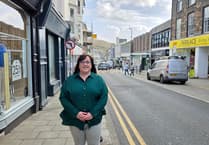
Eluned Morgan strides in unannounced to the National Library cafe in Aberystwyth with her usual confident gait.
Buying ready salted crisps and a ham and egg sandwich for the road, Wales’ First Minister orders a paned (cuppa) while we chat.
The 59-year-old says this is her favourite bit – out seven days a week on the campaign trail ahead of the 7 May Senedd elections, going out to speak to people on doorsteps, giving her time to anyone who will listen about their vote and where to put it - even local journos like me.
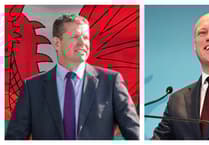


Behind that relaxed exterior is a leader who may well lose Welsh Labour’s hold on Wales as the biggest party for the first time in 104 years, ending the longest winning streak of any political party in the world - and may even lose the seat she has kept for the last 10.
Eluned disagrees – she doesn’t think she’ll be out of a seat, arguing the smart move is to vote for her as an “experienced” Member of Senedd (MS) with a political career spanning 40 years and who has a demonstrable record of delivering for Wales, despite all polls pointing to Welsh Labour being out of a majority come 8 May.
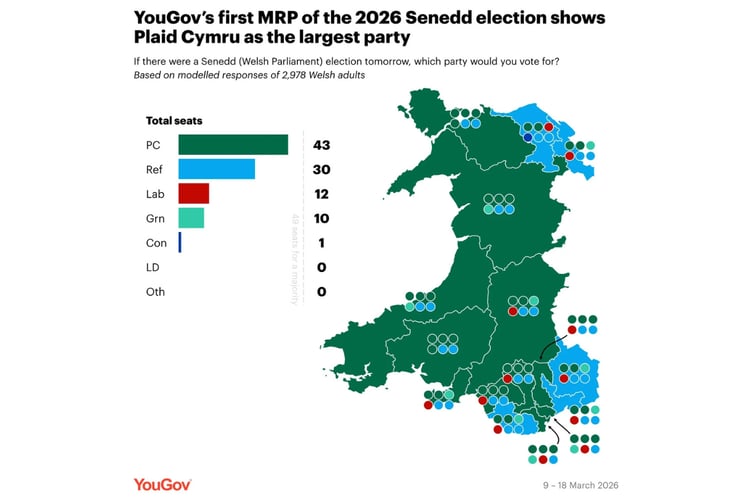
Polling has consistently pointed to both Plaid Cymru and Reform UK securing some of the six seats available in the constituency she is candidate for, Ceredigion Penfro.
Morgan is rolling up her sleeves to fight for the final seats on the list under the new voting system: “I hope that people will recognise that if you want someone with experience, whose got a massive amount of drive and put Ceredigion and Pembrokeshire on the map - you'll probably never have a First Minister again who represents rural Wales, is from rural west Wales, who can make commitments to things like a new west Wales hospital, a new rural economic development plan, a new rural health plan - that's happening because I represent this constituency.
“I think to lose that ability would be a crying shame for people in this area.”
She says she and her party offer stability for Wales, but is that what Wales wants?
Her government’s plan to end homelessness in Wales was due in 2026 but pushed to 2035, her plan for a new hospital in west Wales, her own constituency, was due in 2029, but now it’s forecast to take another five.
Is Morgan offering stability or stagnancy, delays and excuses?
“You’re taking one hell of a risk if you go for other political parties, they’re untested and inexperienced at a time when the world is looking pretty rocky”, said Wales’ first female First Minister, after refusing to answer if Welsh Labour would agree to a coalition.
She forgets, of course, that the Conservatives have held Welsh seats in Westminster since the 1800s, Plaid Cymru (translating to the Party of Wales) since 1966 thanks to Gwynfor Evans.
Welsh Labour have also had to rely on coalitions with Plaid and the Lib Dems historically, and informal agreements to pass everything from budgets to policy.
Her campaign plan seems to target the electorate’s impending sense of doom – she describes Welsh Labour as having not only “kept the wheels on the bus” but delivering for the people of Wales amidst 14-years of austerity, five Conservative Prime Ministers, a global pandemic, Brexit, and the cost of living crisis brought on by the Ukraine war.
Now the Middle East war is driving up fuel prices, leaving many in rural Wales including in Ceredigion Penfro unable to afford the oil to heat their homes.
How could these new-fangled parties possibly navigate these poly-crises better than the 100-year legacy of Welsh Labour?
Morgan said: “People are starting to feel like the world is in a very precarious situation and asking whether it's worth taking a leap into the unknown when it's clear that other parties' plans are either not detailed, not costed or not deliverable.”
Plaid Cymru claim their 73-page manifesto is a “fully costed programme for government”, the Lib Dems and Greens have declined to publish their costings for either of their 40-something page manifestos, Welsh Conservative’s 16-page manifesto lists large spending commitments but little detail is given, whilst the costings behind Reform UK's 18-page manifesto have been explained by “reductions in expenditure elsewhere”.
Has Morgan represented rural Wales well?
Morgan says Wales may never again have a First Minister who truly represents rural west Wales.
What has she done for the area?
She is quick to point to investments via the mid and north Wales growth deals investing in things including Aberaeron harbour and both mid Wales universities, though this was in part thanks to the Conservative Wesminster government.
The new Nuclear Power Station in Anglesey is another Wales-Westminster joint venture, whilst a new medical school in north Wales hopes to attract more medical staff to the area.
However residents in mid and north Wales say they feel forgotten about, with the majority of funding staying in the south, where the highest concentration of people live.
Putting your questions to her about the issues that most affect her patch, we turn to healthcare.
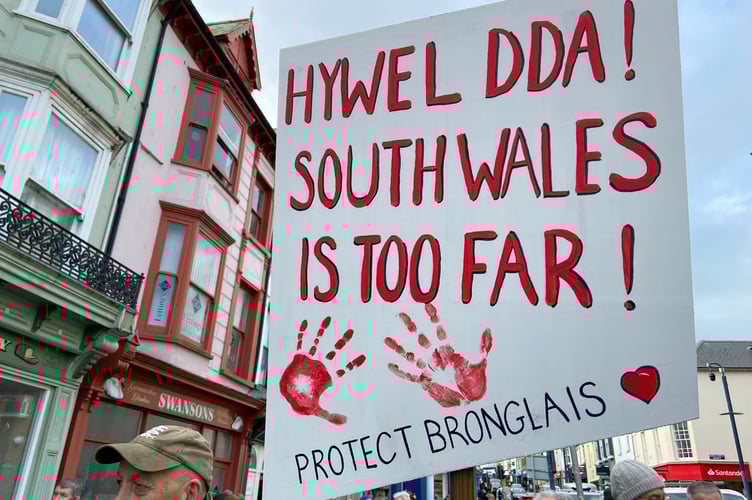
She is eager for people to understand that health boards decide how the NHS runs in their regions – nonetheless, many of her own constituents have called on her to intervene on the plan to downgrade the stroke unit of mid Wales’ only general hospital, Bronglais.
The plan, approved in February, would see Bronglais become one of three Hywel Dda hospitals whose specialist stroke units would be downgraded to treat-and-transfer units, leaving Glangwili in Carmarthen to rehabilitate the region's stroke patients.
One of the main concerns residents raise is patients being transferred two hours south in delicate conditions on the current state of roads, and how their families, crucial to recovery, will be able to visit them.
Morgan has requested the hospitals come up with transport plans, “they can’t just suggest to centralise everything and say you’ve got to sort yourselves out, that’s not good enough”, adding that “transport for me is fundamental, particularly for people who don’t have cars”.
However as the state of roads isn’t the responsibility of health boards, I pushed her on this, at which point she said she had personally filled a number of potholes: “When I became First Minister I went on a listening exercise and one of the things people first came up with was potholes – it's a huge issue and that’s why on top of what local councils do already, we’ve provided funding to fill 200,000 potholes since I became First Minister (August 2024), I filled quite a few of them myself.
“Potholes are an everlasting problem, so we need to make sure the money's available to keep going with road improvements.”
She was evasive about the abominable wait times in Powys, which have doubled for some waiting for hip and knee replacements in the county due to the health board not being able to afford the speed at which treatments were occurring in the English hospitals for Powys patients.
On this she pointed to the surgical hubs created to reduce wait times for these kinds of orthopedic surgeries – however these hubs are in Neath Port Talbot, Llandudno, and Llanelli, nowhere near the struggling population of Powys, whose health board has been fighting budgetary issues for years.
This doesn't help to address the image of Morgan being incredibly south-centric – she was born in Ely, Cardiff, but now lives in St Davids, joining the government as regional Senedd Member for Mid and West Wales in 2016.
Powys is a difficult place to get right; as the geographically largest county in Wales, it has a relatively small population across a huge area and no general hospital, making managing budgets and treatment options difficult.
She loves to say the “taps have now been turned on” regarding funding from Westminster with Labour in power, however the budget set in January allocated nothing to address this growing issue in Powys, being “ignored” by Welsh Labour according to Montgomeryshire Senedd Member Russell George.
Last summer, at the same time as lengthened wait times began for some Powys patients, the Welsh government announced £120m additional funding to cut wait times across Wales; however, none of this money would go to support those patients waiting for treatment in English hospitals.
When challenged on this, Morgan said it was important to get “as much consistency as possible so it doesn’t matter where you live”.
Morgan isn’t foreign to healthcare policy - appointed Health Minister in 2020 mid-pandemic, she helped navigate the country out of lockdown and overseen the driving down of wait times since, which are currently the lowest since 2020 - people now wait an average of 18 weeks for treatment.
![Minister Sarah Murphy [right] with Dana Scott, director of midwifery, senior responsible officer for Women’s Health Plan. Photo: The Cambrian News](https://www.cambrian-news.co.uk/tindle-static/image/2026/01/29/15/46/MS-Sarah-Murphy.jpeg?width=752&height=500&crop=752:500)
She says having a woman in charge “makes a difference”, describing the recently launched Women’s Health Hubs - one launched in Aberystwyth - as a “personal mission”.
In 1994, she became the youngest ever Member of European Parliament at 27 and became the first full-time politician in Wales to have a baby whilst in office.
The national rollout of Women’s Health Hubs saw one open in every health board, aiming to bring women’s health care closer to home, making appointments, diagnoses and treatments more accessible and bridging the gender health gap.
Next, I put your concerns to her about wind farms.
There are around 48 proposals for private windfarms across Wales currently seeking permission, some of which would build on or near carbon-storing peatbogs and Sites of Special Scientific Interest.
Over 300 landowners are currently taking one of these private companies to court over “unlawful” abuses of power.
However amidst the fuel crisis, Morgan said we need a mix of local and external investments to meet the growing demand for electricity: “Thirty-five per cent of people in this county depend on oil to heat their homes - they’re already feeling the pain [of this crisis].
“It’s important to work out, what happens next?
“The fact is we’ve got to move to a new electric system.
“You’ve got to be honest with the public, there will be a need for instastructure to go along with that energy transition.
“We have set out in our manifesto that we want to see an energy independent Wales.
“I understand that compromises will need to be made and we’ve got to the balance right between infrastructure and maintaining our countryside whilst reducing energy costs.”
The big breakup
It’s hard to imagine a Wales without Labour in charge, because it’s never happened.
Much like a dysfunctional marriage, you've been in it for 27 years, there’ve been good times punctuated by a lot of disappointments.
Do you bail now into the unknown or stay under the well-worn promises of change?
The key to why Welsh Labour may finally lose its long-term love affair with Welsh voters may be of its own making.
In 2021, a manifesto pledge was to complete the electoral reform work, which was set in motion after an independent panel concluded that the Senedd was no longer fit for purpose.
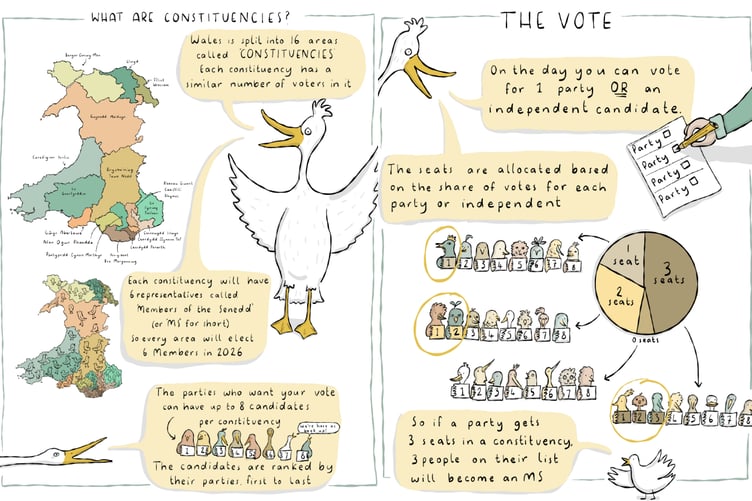
The reforms expanded the Senedd by 36 members and changed the voting system, which may or may not make people’s votes count more with a version of Proportional Representation.
The new Closed List Proportional system does this by ensuring the share of seats each party wins is more closely aligned with the share of votes they receive – for example, 33 per cent of the vote will give a party two of the six seats in a constituency.
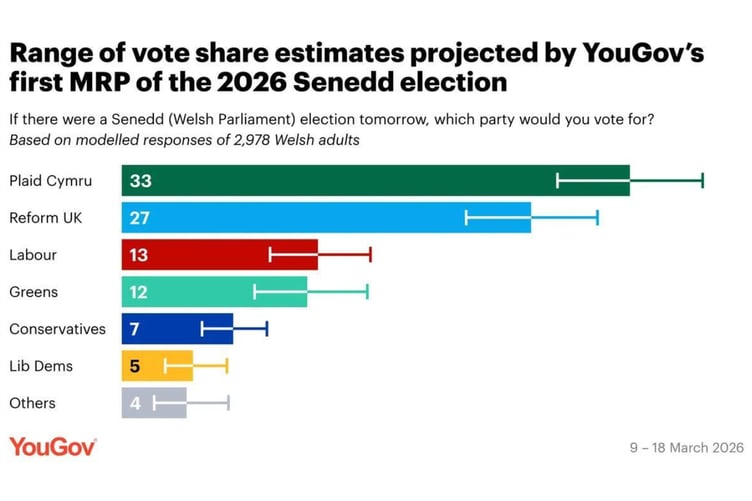
In this way, their manifesto pledge may have been their undoing – polls are now showing Plaid Cymru and Reform UK pretty much neck and neck, with Labour coming either third or fourth behind Greens.
It is also what Morgan is banking on, as the final sixth seat is very hard to predict, and she hopes her Ceredigion Penfro constituents will choose her for that final seat, “at least”.
Comments
This article has no comments yet. Be the first to leave a comment.