
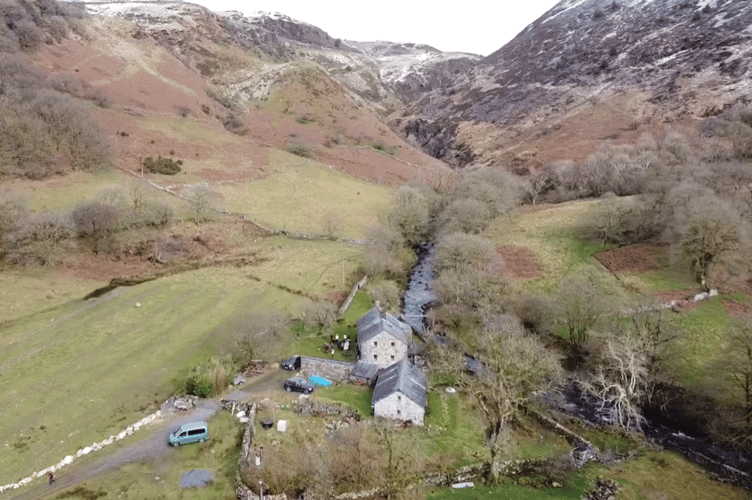
The brothers behind a controversial hydro-electric scheme have spoken out after the decision was postponed.
The fight over the future of Cwm Cynfal near Llan Ffestiniog continues after the planning decision was postponed last month, following last-minute intervention from the Welsh government.
Farming brothers Dafydd Elis, Elis Dafydd and Moi Dafydd state that despite news reports, the residents are majority in favour of the scheme, which would harness the power of the iconic waterfall Rhaeadr y Cwm to provide low-cost electricity for up to 700 local homes, saving 1,962 tonnes of Co2 emissions annually.
Moi Dafydd, the youngest of the three, said: “Locals are very supportive, I have to say.
“It’s been misinterpreted - we had a drop-in event in Llan, and most of the people are very supportive.”
There were 453 objections out of 592 responses to the scheme, however Moi said that most of the objections were identical, following an online campaign, with some writing in from the US.
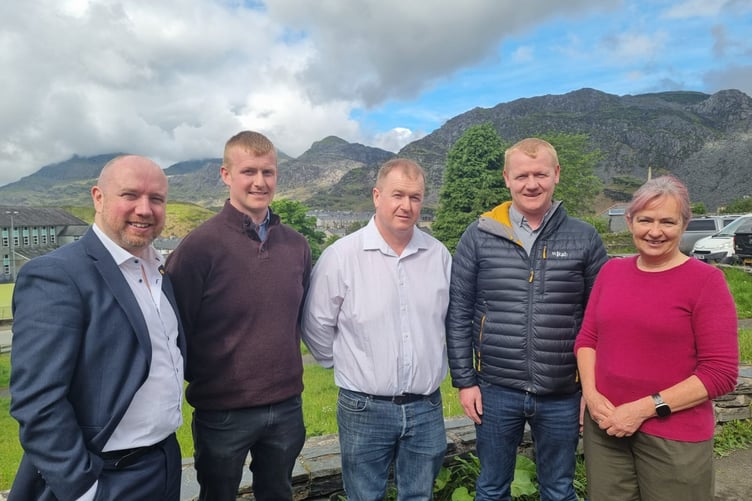
Mabon ap Gwynfor MS and Liz Saville Roberts MP have previously endorsed the scheme, with Saville Roberts stating recently: “Whilst the scheme is in an environmentally sensitive area, it is encouraging to know of all the work carried out by various experts in their field to document the nature of the site.”
The scheme has been earmarked for approval by the planning officer despite being on a Site of Special Scientific Interest (SSSI) but on decision day on 21 January the Welsh government issued a holding direction to give further time for consideration.
The brothers would use the power of the water's current to create electricity by installing an underwater turbine, but some residents suggest the temporary and permanent works would cause irreparable harm to the historically significant site.
Pat Thynne lives in a 500-year-old farmhouse a few hundred yards downstream of where they would put the scheme, which would involve two permanent one-storey buildings, digging a 1.2km pipeline and a weir to collect water.
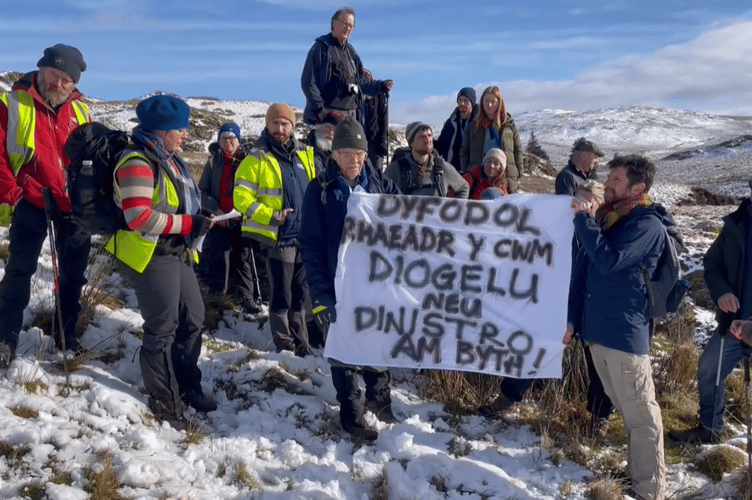
The 74-year-old retired local government lawyer said: “It’s an incredibly special place, it oozes history - it’s wild and rugged and entirely itself - it’s one of those places where you realise human beings aren’t really relevant.
“It belongs to the people of Llan Ffestiniog, they come and walk their dogs here, the blokes go fishing, the kids go swimming here, it belongs to them.”
She is particularly concerned with a temporary access road which would be built along a medieval track.
Following a public meeting, the brothers pursued the feasibility of an Energy Local Club, which would mean the residents would benefit from the cheaper energy rates if the scheme went ahead.
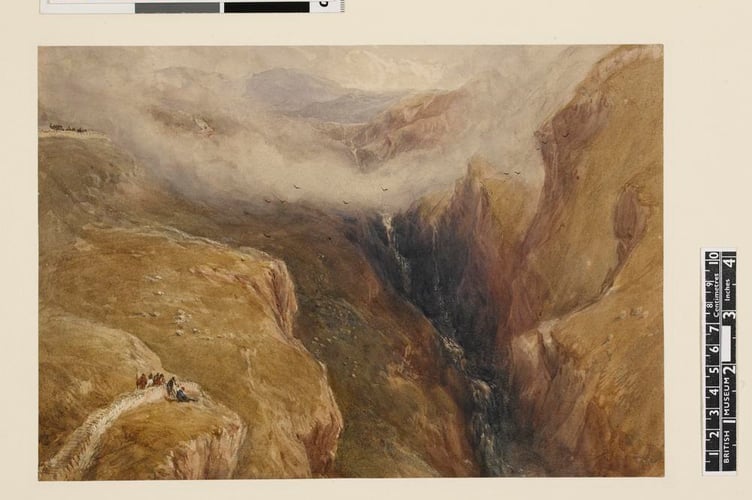
Afon Cynfal runs through the gorge in a series of small waterfalls ending in a steep 120m drop, home to protected species including bryophytes, with part of it deemed an SSSI, sections of “considerable historic interest” with 24 archaeological areas as well as ruins of mines, is a Special Protection Area (SPA) and Special Area of Conservation (SAC).
Bryophytes are a group of plants including mosses, liverworts and hornworts, including protected species.
Campaigners are concerned with the impact the development and turbine would have on the delicate species, which would involve 70 per cent of the water that is above a cap being syphoned off and returned to the river downstream.
Ffestiniog town councillor and recently retired director of the Snowdonia Society, Rory Francis, said: “Most of the rivers in Eryri suitable for hydro-electric schemes have already been developed.
“My problem with this scheme is it's on an incredibly sensitive river and waterfall.
“We shouldn’t be damaging something which has been part of Welsh history and landscape for millennia.
“The fact is, we don’t know what the impact on things like the bryophytes will be, but good planning sense is not to do something if the consequence is not known.”
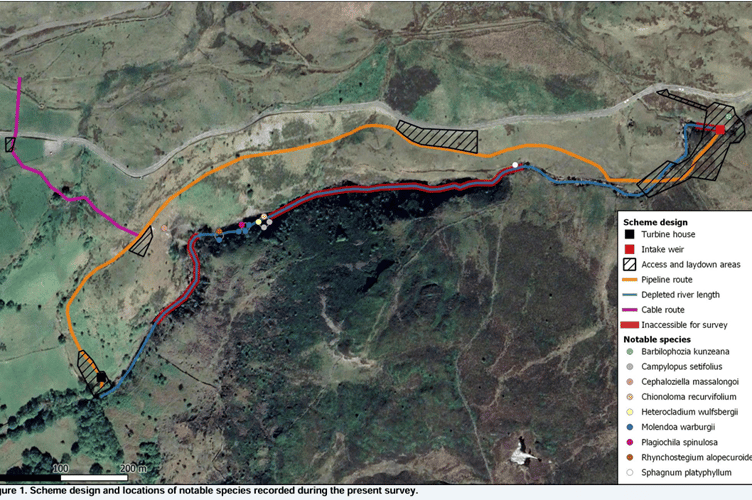
A Bryophyte survey was conducted by Dr Des Callaghan (or Bryophyte Surveys Ltd), identifying 133 species on the site in 2023, though much of the site is inaccessible due to steep drops.
None were identified as having special legal protection, some were deemed to be impacted by the works, whilst others, including two of the most significant species, are “hydrology disconnected from the river” and therefore wouldn’t be impacted.
Moi, 35, said: “The Snowdonia Society’s ideology is to keep the park untouched.
“They need to realise it’s a living landscape where farmers are trying to make a living.
“Farmers are being encouraged by the Welsh government to diversify to help the environment.
“We’re trying to do our part as farmers.”
Comments
This article has no comments yet. Be the first to leave a comment.