
RAMADAN is considered to be one the ‘holiest month’ for the Muslim community.
It is a time where people from across the world take part in activities that spread goodness onto others, as well as practising ‘patience, and self control’ and purity within themselves Ramadan is known as the month of ‘forgiveness, piety and goodness’.
The month of Ramadan began on Wednesday 22 March, and ends Thursday April 20 with the Eid celebration. During the month of Ramadan, Muslim people will fast from sunrise until sunset, going without both food and water.
The timing of Ramadan varies each years, depending on the lunar cycle, with the month beginning when the new moon is sighted. Ramadan is the ninth month in the Hijri calendar.
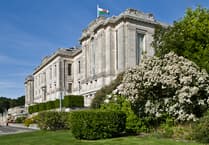


Dr Muhammad Naveed Arshad, a Research Scientist at Aberystwyth University explained the importance of fasting. He: “Ramadan is the holiest month for the Muslim community, it’s the month of fasting. As part of Ramadan we fast from dawn to dusk, so in this time we won’t eat or drink anything. We still get two meals a day, the first will be about 4am, and the second after sunset at about 7pm.”
“Fasting is important in two ways, the first is that it teaches us control of our desires, and patience. The second is that it makes us think about the people who don’t get to eat three meals a day, and may only get one.”
“The Qur’an, which was passed onto the Prophet Muhammad, Ramadan is mentioned. In the Qur’an, it says that fasting is compulsory for all adult Muslims. It is bestowed on us in the same way it was bestowed on the people who came before us.
Dr Arshad said another important part of Ramadan is to give a portion of each family’s savings to those who need it. Dr Arshad said: “In the month of Ramadan we give 2.5 per cent of our annual savings to those who need it and those who have less earnings. This way we move wealth more evenly across everyone.
“I think of it as a workshop from Allah the God about how to endure life, and how to better understand the people living in your society.”
Latifa Alnajjar, who runs the Syrian Dinner project, is celebrating Ramadan with her husband and family.
Mrs Alnajjar said: “Ramadan is a very special time for Muslims. It is the month of forgiveness, piety and goodness. It involves extra prayer, fasting from Sunrise to sunset, and joining together when we eat. It’s a time where we spread goodness, both within our hearts and to others in the world. It’s a time where we remember the people who can’t eat, and those less fortunate.
Mrs Alnajjar said: “I remember when we were very little, we would share with neighbours, and they would share with us. Everyone shared and helped as a community. We need to be able to help each other.”
As well as helping those around and fasting, Muslim communities hold extra prayers during the month of Ramadan.
Traditionally Muslim people pray five times a day, but in Ramadan also say the Taraweeh prayer after ‘breaking the fast’ by eating in the night.
The festival of Eid Al-Fitr takes place at the end of the month of fasting, and is scheduled to be on Friday evening, 21 April.
Comments
This article has no comments yet. Be the first to leave a comment.