
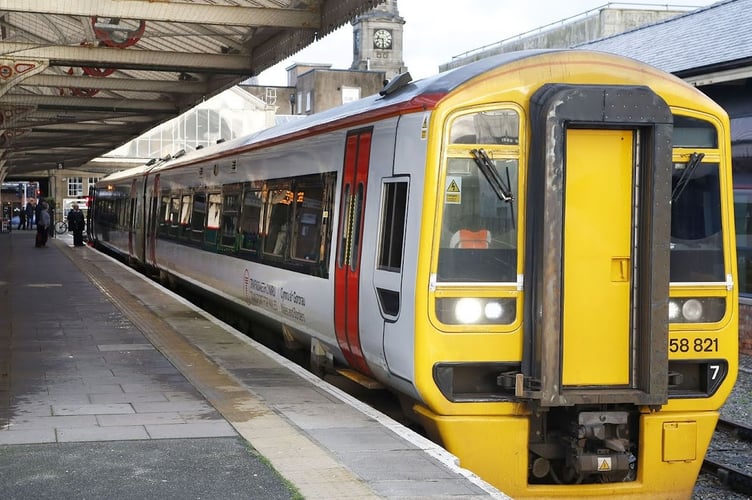
Aberystwyth railway station use is still down by two-fifths on pre-pandemic levels – with only one in Ceredigion and Gwynedd seeing growth in passenger numbers.
Usage more than doubled across Great Britain in 2021-22 as people across the country returned to more normal travelling routines – but remained below levels seen before the coronavirus pandemic, new figures show.
Office of Rail and Road figures show 217,720 passengers entered and exited train stations in Ceredigion in 2021-22 – up from 50,180 the year before but below pre-pandemic levels of 334,514 in 2019-20.
The ORR’s estimates of station usage are taken from the rail industry’s ticketing and revenue system, Lennon, with some local ticketing data. Adjustments are made to make the estimates as accurate as possible, the regulator said.



Of the three stations in Ceredigion, Aberystwyth was the most used station with 171,262 visitors, while Bow Street was the least used with 13,694.
And in Gwynedd, Bangor was the most used station in the year to March as 444,790 passengers entered and exited. At the other end, Tygwyn saw the least activity, with 224 visits across the year.
Numbers at Aberystwyth railway station – the terminating stop on the west coast Cambrian Line from the Midlands – are down nearly two-fifths on pre-pandemic levels.
Llanbedr in Gwynedd saw the biggest drop of 78 per cent followed by Fairbourne which is down by more than a half.
Dovey Junction was the only station on the Cambrian Line that saw an increase, which was of more than two-thirds. The closest to returning to pre-pandemic levels was Harlech which is only 23 per cent below 2019-20 levels.
Most other stations were between 35 and 50 per cent below those rates.
Change in numbers
| Railway Station | Passengers in 2021/22 | Passengers in 2019/20 | % Change |
| Aberystwyth | 171,262 | 278,880 | -39 |
| Bow Street | 13,694 | N/A | N/A |
| Borth | 32,764 | 55,634 | -41 |
| Dovey Junction | 7,030 | 4,292 | +64 |
| Machynlleth | 75,440 | 121,068 | -38 |
| Caersws | 31,398 | 59,274 | -47 |
| Newtown | 87,598 | 151,570 | -42 |
| Welshpool | 98,128 | 165,724 | -41 |
| Aberdyfi | 22,886 | 36,560 | -37 |
| Tywyn | 58,560 | 101,726 | -42 |
| Fairbourne | 18,438 | 38,086 | -52 |
| Barmouth | 124,896 | 195,644 | -36 |
| Llanbedr | 2,596 | 11,716 | -78 |
| Harlech | 103,502 | 133,824 | -23 |
| Porthmadog | 38,718 | 68,204 | -43 |
| Criccieth | 16,316 | 23,954 | -32 |
| Pwllheli | 45,208 | 65,464 | -31 |
Across the country, passenger numbers rebounded from a pandemic drop in 2020-21.
An estimated 1.8 billion visitors entered and exited train stations in Great Britain last year – more than double the 690 million visitors the year before. But this was still well below the 3 billion who used stations in 2019-20, before the pandemic.
ORR director of planning and performance Feras Alshaker said: “It is heartening to see passengers return to travelling by rail following what was a difficult period for the industry during the pandemic.
“Once again it is important to thank all those in the rail industry, who continue to work hard to help people travel safely and with confidence.”
Transport think tank, the Institute for Transportation and Development Policy, said it is positive to see numbers rebounding, but that there is still a long way to go.
Jacob Mason, research and impact director at the ITDP, said: “As we recover from the pandemic, the time for a major investment into public transport is now.”
The Department for Transport said it has provided more than £16 billion of funding for passenger services since the start of the pandemic.
A spokesperson added: “We now need to reform our railways to reflect changes in travel trends and restore financial stability on our railways.”
Comments
This article has no comments yet. Be the first to leave a comment.