
Two years of excavation work at Pendinas has been celebrated with a special festival over the weekend in Penparcau.
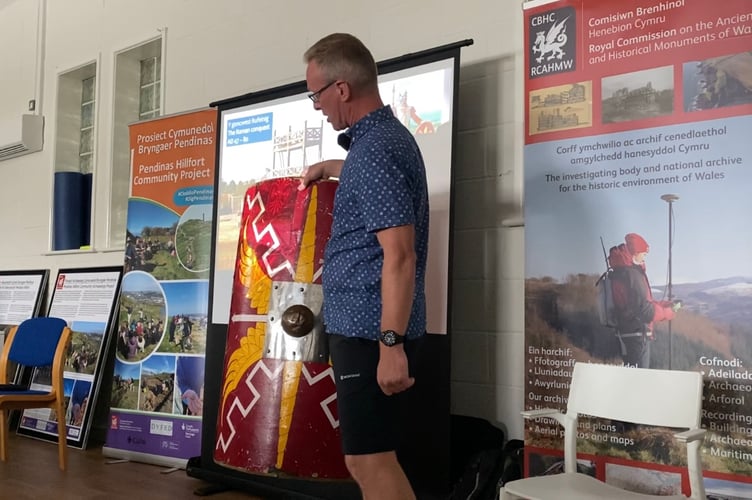
The Pendinas Archaeology Festival was held in the Penparcau Hub on Saturday, 16 September and took those present back in time across 2,000 years of history.
The event celebrated the excavation work which has taken place over two years and is set to end in two weeks.

.png?width=209&height=140&crop=209:145,smart&quality=75)

It was hosted by the Royal Commission on the Ancient and Historical Monuments of Wales, who ran the Pendinas Project alongside the Dyfed Archaeological Trust after they received funding from the National Lottery Heritage Fund and Cadw.
Saturday’s event offered the chance to see uncovered artifacts from across Wales, and learn more about the discoveries made in the excavations in 2021 and 2023 from members of the Royal Commission, including CEO Christopher Catling and Dr Toby Driver, who spoke about the history of the fort, and what has been uncovered.
Attendees also had the chance to take a trip up to the Iron Age hillfort, and be guided through the excavation of a roundhouse by volunteers who’ve taken part in the work. Children took part in face painting, crafting their own miniature iron age roundhouses, and trying on some Roman battle armour.

Christopher Catling said: “The main discovery we’ve made is finding out that the hillfort was densely populated, there were so many huts up there that they were crowded together, like a densely populated mediaeval city where the roofs would almost touch each other from across the street.
“We’ve also found evidence of early medieval material which shows that the fort was reoccupied when the Romans left Britain in the fifth century, people moved back up there and started using its defences in this period of turmoil.”
In 2021, archaeologists also uncovered an Amber bead which would have originated somewhere around the Baltic sea, implying the hillfort could have been a centre of trade with merchants travelling there from Europe.
Mr Catling said local people’s interest in the site made these discoveries possible. Up to 50 local volunteers have taken part in the excavation, and walks to Pendinas have been organised for a variety of community groups, as well as the children of a local school.
Mr Catling said: “The project arose because local people were coming to us and asking what we knew about the history of their hillfort. We didn’t know very much, and decided we would try and answer their question by applying to the National Lottery Heritage Fund and Cadw to finance some excavation work.”
Ceredigion MP, Ben Lake, attended the event and travelled up to the hillfort. He called the project ‘unique’ and ‘special’ for the way it has involved members of the local community with the work.
Mr Lake said: “It’s wonderful to be here, going up to Pen Dinas itself and seeing the archeologists at work has been exciting, especially discovering that there were actually quite a lot of huts up there at the time.
“It’s been nice seeing how people of all ages including children have been going up and had the chance to learn about our local history. I think the project here is quite unique and special. It gives us a chance to bring the local community and local heritage closer together.”
The project officially ends in August 2024. Another event at that time will explain the results gathered by laboratories analysing the samples from the site over the past years, which will shed a light on when in history people occupied Pen Dinas Hillfort and what life was like for people up there back then.
Comments
This article has no comments yet. Be the first to leave a comment.