
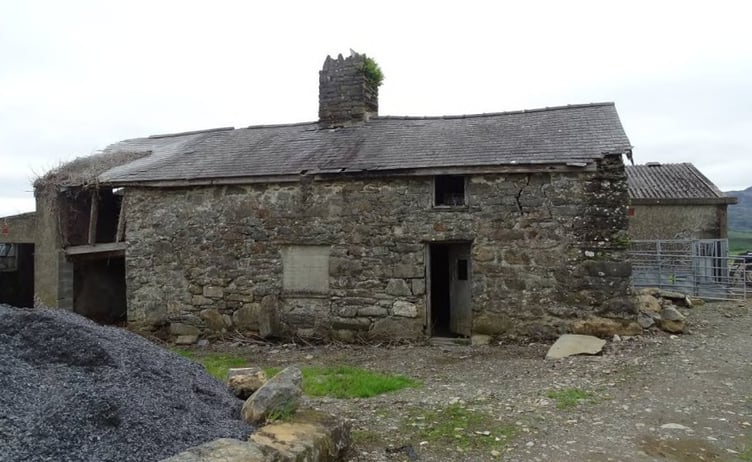
Eryri national park planners will recommend refusal of a plan to demolish an “increasingly rare” 18th century farm building at Llan Ffestiniog.
Archaeological and historical experts Heneb described the property at Cwm Cynfal as a traditional structure of a type that has “historic and local interest”.
It noted that it was entered on the Historic Environment Record as “part of a high-level thematic register of historic farmsteads, intended to inform future rural land management”.
It also stated the type of property was of a type “…considered to be of significant historical and archaeological importance” and as such “warranted preservation”.
Adfer Conservation also stated that whilst not listed, the property, at Gelli Dywyll farm was likely to date from the late C18, despite its current condition and was “of historic value”.
“The total demolition of this building should be resisted as its loss would damage the historic environment.”
Although it was acknowledged that “partial demolition and rebuilding may be necessary to ensure its future,” it was felt that support could not be given to “demolishing and replacing it with a wholly inappropriate new building, of considerable size, which bears no resemblance to the building it proposes to replace”.
The property is recognised by the authority as a “locally listed building” since 1994, plans stated.
“Buildings designated as ‘locally listed’, whilst not achieving the status of a listed building, are historic buildings that retain their original historic form and external features on all major elevations and/or have been sympathetically altered.”
The matter has been called in to the planning by a member of the authority, and is due to be discussed at the next national park planning meeting on Wednesday, 9 September.


Planners are recommending refusing permission, based on a “lack of justification for the demolition of a locally listed historic building.”
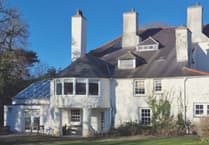
It also due to the “design and massing of the replacement dwelling” and a “lack of details” to inform a habitat regulations assessment.
A previous demolition bid was refused on 21 January. Reasons for the refusal given were that the “applicant has failed to provide substantive justification for the demolition and subsequent replacement of a traditional building”.
The proposed two-storey dwelling, because of its “design and massing,” was also considered “not be compatible with the capacity and character of the site and locality”.
An application for a Certificate of Lawfulness for use of the building as a dwellinghouse, had been approved on March 6, 20 2007, although it was noted the Certificate of Lawfulness did not include a brick lean-to extension.
The planning details stated: “Gelli Dywyll is likely to date from the late C18 And, despite its current condition is of historic value and local interest.
“The building is of traditional vernacular character and is within the open countryside.
“Gelli Dywyll is a locally listed building (similar to traditional buildings), and whilst these buildings do not have any formal recognition or statutory
protection, they are acknowledged by the local authority as buildings of
special local interest.
Find out about planning applications that affect you by visiting the Public Notice Portal.
“Inclusion on the traditional list allows the authority to manage change through the planning system so that local historic assets continue to contribute to the character of the area.”
Comments
We've recently changed our login process. If you have an account for commenting, you will need to re-register on the login window.
This article has no comments yet. Be the first to leave a comment.