

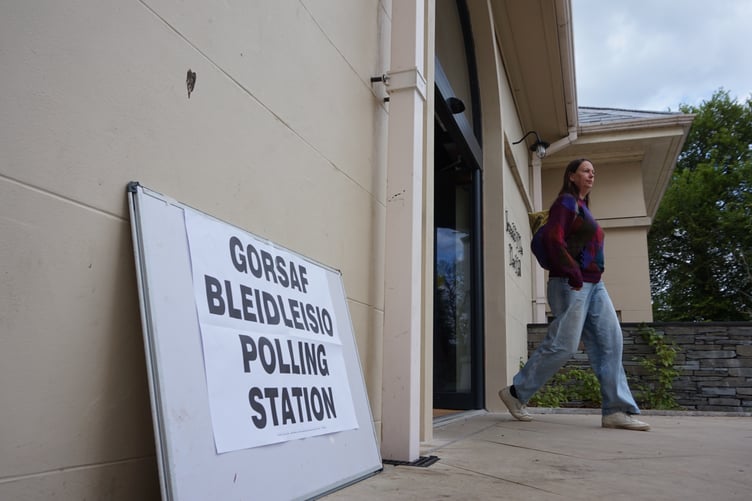
More people in Wales favour keeping the current Senedd voting system than returning to the old one, according to a new in-depth study of May’s devolved election.
Based on a survey of 10,000 people in Wales, the findings show that 35.2 per cent of respondents prefer to keep the system of voting for parties used this year, compared with 30.6 per cent who favour a return to voting for individual candidates.
Led by researchers from Aberystwyth University and Swansea University, these findings from the Welsh Election Study 2026 also show that knowledge of the new Senedd voting system increased during the election campaign.
While most people, 58 per cent, still did not know how the closed-list proportional representation system worked, the study shows that 69 per cent found it easy to cast their vote and 58 per cent also felt the new system was fair to political parties in terms of translating votes into seats.
A quarter of respondents said they had voted for a political party to prevent another party from winning in their constituency, suggesting tactical voting played a role in the election.
Most of this tactical voting benefitted Plaid Cymru, who won the most seats and votes in the Senedd election.
Those surveyed reported particularly positive feelings towards Plaid Cymru and the Wales Green Party, while views of Reform UK were more negative and characterised by sentiments such as fear, anger and irritation.
The research also explored how people felt about the places where they live: with 41 per cent feeling that the Senedd election campaign drove people in their local area apart rather than bringing them together.
Dr Anwen Elias from Aberystwyth University, who co-leads the study, said: “The support for the new voting system may surprise many.
“It will no doubt influence the ongoing debate about future possible electoral reforms.




“While many people found the new voting system straightforward to use, understanding of how it worked remained limited.
“Overall, the 2026 Senedd election revealed a mixture of engagement, uncertainty and frustration among voters in Wales.
“The findings also highlight wider concerns about the relationship between politics and communities. Many respondents feel a strong sense of pride in the communities where they live.
“But there is also a clear frustration with the economic decline in these places, and scepticism that the Welsh Government will make any difference over coming years.”
The detailed academic study also found that many people also felt that the economic situation in their local area had declined, and that local authorities, particularly the Welsh Government, did not care enough about the places where they live.
The NHS, cost of living, housing and jobs were the most important issues for voters in this election. However, about a third of people were unsure which political parties they trusted most or saw as competent to address these challenges.
The Welsh Election Study 2026 is a four-year research project funded by the UKRI Economic and Social Research Council (ESRC).
Comments
We've recently changed our login process. If you have an account for commenting, you will need to re-register on the login window.
This article has no comments yet. Be the first to leave a comment.