

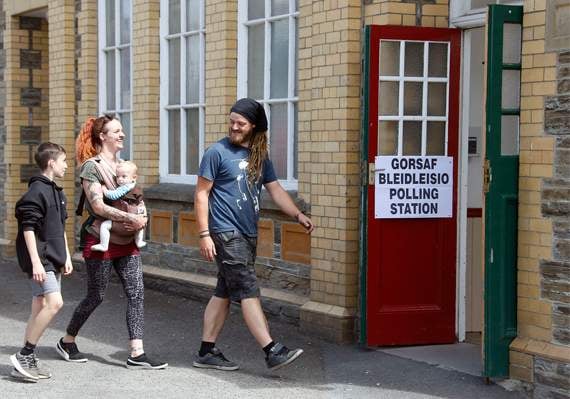
Ceredigion and Gwynedd were two of just three local authority areas in Wales to not be won by the Brexit Party at the European Parliament elections.
Both counties, along with Anglesey, were won by Plaid Cymru after votes were counted – but in the 19 other areas in Wales, Nigel Farage’s six-week-old party topped the polls.
In Ceredigion, Plaid secured 37.2 per cent of the vote, with the Brexit Party claiming 32.9 per cent.
In Gwynedd, Plaid took more than half the votes cast.



Turnout figures for Ceredigion were well above the Wales average of 37.3 per cent, at 45.7 per cent.
Powys followed the Wales-wide trend, being won by the Brexit Party with 35.3 per cent of the vote.
Plaid Cymru finished in second place in Wales, winning one European Parliament seat with 19.6 per cent of the vote.
It was the first time the party had finished ahead of Labour in a nationwide election.
Labour, with 15.3 per cent of the vote, only narrowly beat the Liberal Democrats to take the fourth and final Welsh European Parliament seat.
The Conservatives put in their worst result across the UK in a nationwide election since 1832, while tallying just 6.5 per cent of the vote in Wales.
Overall, the UK sent 28 Brexit Party MEPs to the European Parliament, with the party picking up 32 per cent of the vote and being the largest party in nine regions.
The Liberal Democrats won in London and have taken 15 MEPs.
The Conservatives fell to fifth place and now only have three MEPs, while Labour lost eight of its sitting MEPs along with 11 per cent of its vote share.
The Greens gained four MEPs to sit on seven, while in Scotland the SNP won three MEPs, with the Brexit Party, Lib Dems and Conservatives taking one each.
The voting numbers have led leaders and politicians on all sides to claim victory, with both Wales and the UK overall remaining divided over the Brexit question.
The results signalled a shift in Labour policy towards a second referendum, while Plaid leader Adam Price claimed the results showed that Wales was now a "Remain nation".
Mr Farage said that the results showed a “clear message” that people wanted to leave, while senior Conservative politicians said that people wanted to “get on with Brexit”.
Comments
This article has no comments yet. Be the first to leave a comment.