

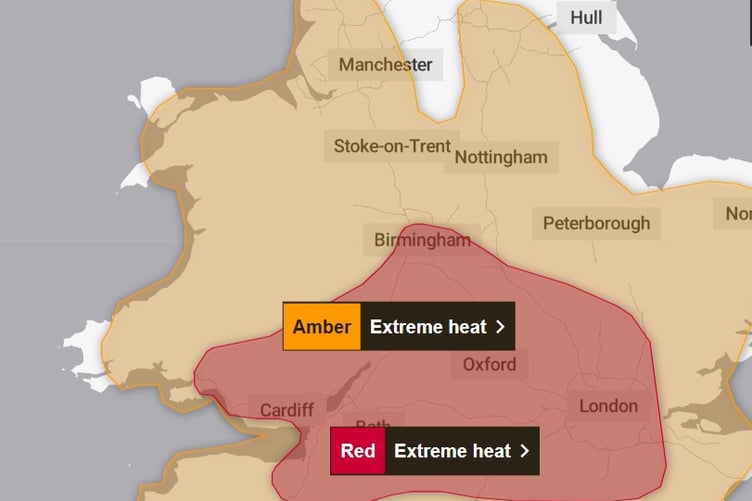
Forecasters have issued red and amber extreme heat warnings for later this week, with temperatures set to hit 37°C in west Wales.
A red warning will cover much of the south Wales valleys on Wednesday and Thursday, with 40°C temperatures possible, accompanied by strong humidity.
Further west, the Met Office says an exceptional spell of hot and humid weather is expected across this region, with impacts to the general population highly likely.
The Met Office says the extreme heat is like to cause significant disruption to daily life.




The amber warning, which covers much of Wales, says: "During the heatwave expected to affect a large part of England and Wales this week, the highlighted area now looks increasingly likely to see a two to three day period where maximum temperatures in the shade exceed 37 Celsius, perhaps rising to 38 to 40 Celsius in some places.
"The heat will be accompanied by high humidity, exacerbating the potential for discomfort and health impacts, with very warm and humid night times also reducing the ability for people to recover overnight.
"Significant disruption to daily life is likely and the public should take every effort to make precautions and adapt their daily routines where possible to cope with these levels of heat, which up to now have been extremely rare for the UK."
Forecasters say the hot weather could lead to serious illness or danger to life to much of the population substantial changes in working practices and daily routines will be required.
The warning is in effect from midnight Wednesday until the end of Thursday.
Temperatures are expected to drop on Friday, with Aberystwyth forecast for cloud and temperatures in the low 20s for the weekend.
Met Office Deputy Chief Forecaster Tom Crabtree, said: “The forecast heatwave is developing into an impactful severe weather event, with record breaking June temperatures and very high humidity. The combination of heat and humidity will be oppressive and bring impacts across society from public health and infrastructure, to power and water supplies.
“As well as very high daytime temperatures, there will be consecutive nights where temperatures do not drop below 20°C, which is called a Tropical Night. This will make it very hard for people to recover from the daytime heat, exacerbating the heat stress impacts.”
The warning highlights potential health impacts for the wider population, not just those vulnerable to extreme heat. It also warns of potential heat-related issues for a range of sectors such as transport, energy and water supply.
An increase in potential water safety incidents is also noted, as more people are likely to visit coastal areas, lakes or rivers.
People heading to the coast should be mindful that sea-surface temperatures are not as high as they would be in mid-summer.
Samantha Hughes is the National Water Safety Partner at the RNLI. She said: “With warmer weather approaching, it’s important to remember that the water is still cold. Entering it unexpectedly can lead to cold water shock, causing a sudden increase in breathing and heart rate, which may trigger panic.
“If you find yourself struggling in the water, remember to Float to Live: tilt your head back so your ears are submerged, relax and control your breathing. You may need to gently use your hands to help you stay afloat, and it’s ok if your legs sink—everyone floats differently.
“Where possible, always choose a lifeguarded beach, and swim between the red and yellow flags. In a coastal emergency remember to call 999 for the coastguard.”
Comments
This article has no comments yet. Be the first to leave a comment.