
Madam,
I thought your readers might be interested in some information and history on the red kite in Wales.
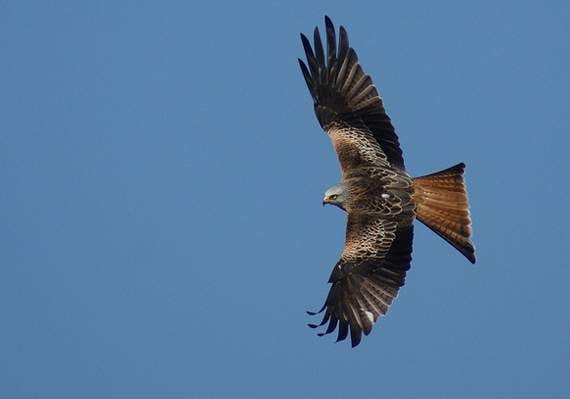
Its colourings are red, brown and fawn, with a distinguishing fork tail. The male adult has a body length of two feet and a wing span on four. Its diet consists of small birds, mice, frogs, grass snakes, slow worms and carrion, always taken on the wing. The nest is a rough platform of twigs and dirt, always in an oak tree. The female will lay up to three eggs, white blotched with brown.
The bird is worldwide and has been known for over 500 years, but the species Genus Milvus we have here is only 71 years old. It all came about in the early 1800s. The bird had become a very aggressive scavenger. It had entered the towns and cities, even attacking people. A programme of culling was introduced, which got out of hand. Nests were destroyed, eggs were smashed, and consequently there was total extinction.


We move on to spring of 1947. I lived in Devil’s Bridge then and a favourite walk on a Sunday afternoon was down the Lein Fach. This particular Sunday my brother and I saw these two birds circulating in the sky in the distance. As we got nearer they were no bird that we knew and even after getting home we could find nothing in our Book of Birds either. We eventually found the nest which we monitored regularly. She hatched out two chicks. It was then we notified the RSPB and it was found out what the bird was.
Two breeding pairs of red kites had been released in Wales, on in the Elan Valley, which settled in the Radnorshire area, the other in the uppers of Talybont which settled in the upper region of Cwmrheidol.
Yours etc,
W L Mason, Tregerddan, Bow Street.
Have your say on the local issues affecting you - email [email protected] or join in the conversation on our Facebook page
Comments
This article has no comments yet. Be the first to leave a comment.