
Madam,
Re the proposed metal tree sculpture at Borth. The recent letter published in the Cambrian News from a reader who has suggested that the tree be positioned in front of the prom deserves consideration from those who are in favour of the ‘Tree’.
I was waiting to view detailed structural drawings, from Rob Davies’s structural engineer, before bringing a prospective of archaeological interest forward.
Although I have made some of the following observations to the community councillor assigned to the ‘Tree’.


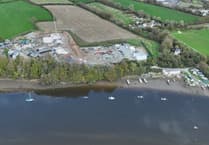

The current perspectives of the ‘Tree’ show a system of ‘ground anchors’ driven into the sea bed, within the ‘forest area’.
The structural details of any such ground anchoring system would require steel pipes to be positioned around the bore hole as the drilling proceeds (these would be withdrawn after the hole has a steel anchor in position and is surrounded in concrete).
Because the low frictional resistance of the sand around the concrete formed anchor would not be sufficient to resist the strain of the tree structure above, a large hole is formed at the end of the bored hole in the ground, forming the end of the anchor (it would look like an inverted lollypop).
This too would be filled with steel and concrete which forms a greater resistance to the uplifting of the anchor. The above process would be made through an unknown number of time stratas.
These are levels of sand and sediment layers built up since the trees were first planted.
It is when these trees were first planted that indignant settlers would have been living and working around this woodland area which raises an archaeological interest.
It is with the presumption that people were living and working in this area from the beginning, if not before, the time the trees were planted, that I suggest that the county archaeologists should demand to have a facility set up to inspect all the excavated soil in search of artefacts.
These could supply valuable information and insight into any inhabitants through the varying times that the time stratas were formed.
After all you would not expect an artistic steel replica of a Roman lookout tower to be built in the middle of an unearthed Roman settlement to be constructed without a detailed archaeological investigation into the excavated materials coming from soil excavated for its foundation.
Yours etc, Phil Turner-Wright, Dolybont.
Have your say on the local issues affecting you - email [email protected] or join in the conversation on our Facebook page
Comments
This article has no comments yet. Be the first to leave a comment.