
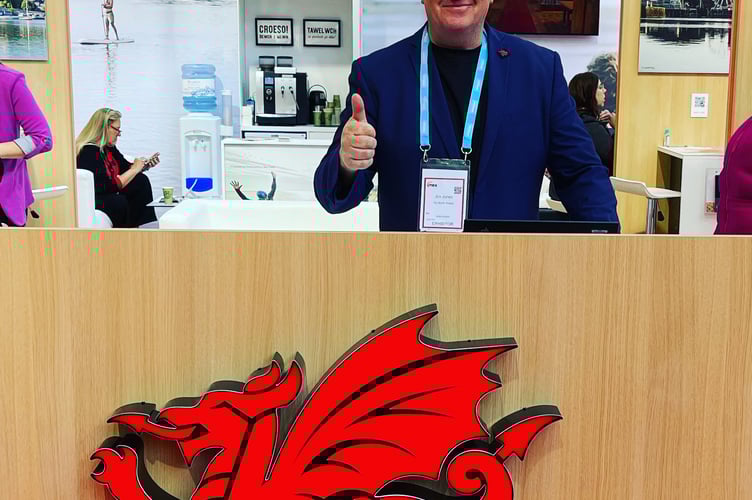
North Wales Tourism Chief Executive Jim Jones is still reeling from Welsh language group Cylch yr Iaith’s belief that Gwynedd does not need any more tourists.
Responding to the group’s criticism of Gwynedd Council’s job advert for someone to attract more tourists to the county, Mr Jones said tourism is the lifeblood of Gwynedd and “people should be careful what they wish for.
Now he is hitting back again.
Putting forward a passionate case for tourism, he said: “I am proud to serve as Chief Executive of North Wales Tourism, an organisation that has spent more than three decades championing this remarkable corner of the world. For over 35 years, our membership body, one of the largest and most influential in Wales, has worked tirelessly to promote North Wales not merely as a destination, but as a place that feels like home the moment visitors arrive.


“I want to share why tourism is not simply important here; it is the lifeblood that sustains our communities, our economy, and our very identity.
“Let me begin with the numbers, because they tell a powerful story of real impact. Tourism in North Wales is worth over £3.6 billion to the regional economy and supports more than 42,000 full-time equivalent jobs. In many parts of our beautiful western region, there simply isn’t another industry on the same scale. When the mines closed and the slate quarries fell quiet, tourism stepped in – not as a temporary fix, but as a vibrant, growing sector that has quietly become the backbone of North Wales life.
“Every hotel booking, every cup of tea in a cafe, and every guided mountain walk puts money directly into local pockets, helping with the local economy.
“Yet too often I hear voices sometimes loud, sometimes well-meaning, that speak of tourism as a problem to be managed rather than a success to be celebrated.
“‘Overtourism’ has become a fashionable word. I disagree. What we experience is not overtourism; we simply have busy periods during peak times of the year. Go back more than 300 years and you will find accounts of Snowdon (Yr Wyddfa) being crowded on sunny days. The mountain has always drawn visitors, yet it has never lost its power to awe. If you seek absolute peace and tranquillity, North Wales offers this in abundance: you can walk for hours without seeing another soul.
“Our living language is one of our unique selling points, visitors love to hear it spoken around them and our welcome has defined us for generations.
“We know this because we have done our homework. Our businesses have undertaken learning journeys across the UK and Ireland, studying best practice elsewhere and identifying what sets us apart.
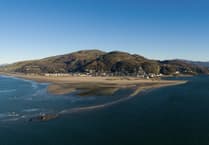
“The truth is simple: few places can match what North Wales offers. Our cultural heritage is extraordinary, from the majestic castles of Edward I to the living legacy of the Mabinogion. Our outdoors are world-class: the rugged drama of Eryri, Snowdonia, the golden beaches of the Llŷn Peninsula, and the wild beauty of the Isle of Anglesey also a world recognised UNESCO GeoPark.
“World-renowned attractions such as Zip World, the National Slate Museum, and Portmeirion’s Italianate, stand shoulder to shoulder with the best anywhere.
“Welsh food and drink are enjoying a genuine renaissance, with restaurants showcasing local lamb and seaweed, craft breweries in former chapels, whisky distilled beside mountain streams, and the pure spring water of the Great Orme.
“Add our quirky charm, the smallest house in Britain in Conwy, the smallest church in Rhos-on-Sea, and Europe’s longest place name, and you have a destination that is both timeless and delightfully distinctive.
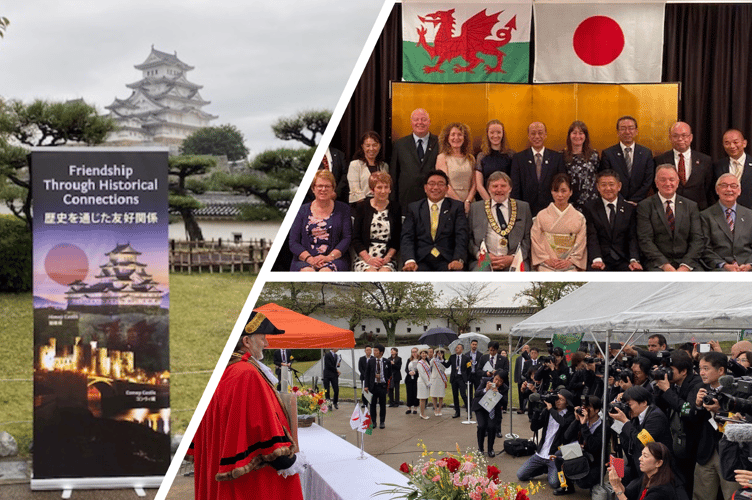
“We have also built strong international connections, particularly with the Japanese market.
“In 2015, the Japan Association of Travel Agents (JATA), a powerhouse of Japanese tourism, recognised Conwy as one of the 30 most beautiful towns and villages in Europe, the only UK destination to make the list. Two years later, in 2017, JATA named the A55 one of the top 20 most beautiful roads in Europe, calling it the ‘Road of Castles in Wonderland’.
“We still proudly use this accolade in our high-end Japanese marketing. This relationship was further cemented when Conwy Castle was twinned with Himeji Castle in Japan, leading to a significant and welcome influx of Japanese visitors who fell in love with our heritage, scenery, and warm hospitality.
“So why do we not yet enjoy the full global profile and high-spending international visitors that Ireland attracts?
“The answer, I believe, lies in fragmentation and focus. Our industry comprises thousands of passionate, often multi-generational independent businesses, family hotels, holiday parks, adventure operators, and guides, working hard every day.
“At national level, however, the long-term strategic leadership we need has sometimes been lacking. Instead of building on successes, such as North Wales being ranked in the world’s top four places to visit in 2017, and a promise by the Minister and officials then, that we would build on this, we have too often seen policies that appear designed to constrain rather than champion a hugely successful sector.
“A minority of critical voices should not be allowed to damage our welcoming reputation when collaboration would serve us far better. We want visitors who spend well, stay longer, and leave with stories they cannot wait to share.
“We want them to fall in love with our mountains, beaches, culture, and communities. Because when they do, they return. They tell their friends. They invest. They become part of our story.
“Tourism is not an invasion; it is an invitation. It funds the restoration of our castles and the protection of our coastline.
It reminds the world that Wales is at the heart of something truly special.
“North Wales is open for business. Managed sustainably and in partnership with the sector, tourism can continue to deliver enormous benefits for generations to come. We have the product, the passion, and the people. What we need now is the collective will to value what we have built over decades and to grow it responsibly into the future.
“Let us watch and see how much support the new Welsh Government gives to our sector, because if they do they’re backing a winner.”
Cylch yr Iiaith’s comments have been met with confusion elsewhere.
Ceredigion county councillor for Penparcau, Carl Worrall, said: “If Gwynedd doesn’t want tourists, then we will have them here in Ceredigion.
“We need tourism, as we need jobs.
“Tourism is the way forward for Ceredigion. Let’s do what we’re good at, we do good holidays. From our beaches, to our seaside towns, hillforts and mountains, there is so much natural beauty to offer people and we should be encouraging a thriving tourism industry.”
The tourism industry as a whole is facing several new challenges, which have been described as a ‘perfect storm’.
With the Easter holidays marking the traditional start of the tourism season, businesses across Wales would normally be preparing to welcome visitors and generate vital early income after the winter months.
However, Welsh Conservative candidates for Ceredigion Penfro Samuel Kurtz and Paul Davies, both long-standing advocates for the local tourism industry, say that confidence is being undermined by mounting financial and regulatory pressures.
Tourism is a key economic driver in Pembrokeshire and Ceredigion, supporting thousands of jobs and a wide network of small and medium-sized enterprises.
Mr Davies said: “Easter is the starting point for the tourism season in Pembrokeshire and Ceredigion.
“It’s when businesses begin to recover after winter and build momentum for the year ahead.
“But instead of optimism, many are facing a perfect storm created by rising costs and damaging policy decisions that we voted against.”
Mr Kurtz added: “Tourism is the backbone of the economy in Penfro and across west Wales.
“But policies like the proposed tourism tax and changes such as the 182-day rule are adding uncertainty and pressure at exactly the wrong time.”
Businesses have raised particular concerns about the impact of the 182-day rule, which is forcing many self-catering operators to meet higher occupancy thresholds or face significant tax increases; the introduction of a tourism tax, which risks deterring visitors and making Wales less competitive compared to other UK destinations; rising operational costs, including business rates, energy, staffing, and compliance burden; and a lack of meaningful engagement with local businesses before policies are introduced.
Mr Davies added: “These policies might be well-intentioned, but the cumulative effect is damaging. At the very point the season begins, businesses are being hit with uncertainty and additional costs that threaten their viability.”
Setting out an alternative approach, Paul said the Welsh Conservatives would prioritise supporting tourism businesses to grow and succeed:
“We would scrap plans for a tourism tax, work with councils to extend access to free car parking in town centres, reduce the 182-day rule to 105 days to ensure it is fair and workable, and work in partnership with the sector, not impose policies on it.
“Our focus would be on making west Wales a competitive, welcoming destination for visitors while supporting local jobs and communities.”
Mr Kurtz added: “The difference is clear. Welsh Conservatives back small businesses and understand the importance of tourism to rural economies.
“We want to reduce burdens, restore confidence, and ensure Pembrokeshire and Ceredigion remain top destinations for visitors from across the UK and beyond.”
Pembrokeshire County councillor for Tenby’s North Ward, Cllr Michael Williams, who represents Plaid Cymru on the Local Authority, said that tourism is without doubt the seaside town and Pembrokeshire’s most valued sector, but a achieving a balance for visitors and residents is crucial.
“Without any doubt tourism is our most valued and important industry and brings considerable value to our area, but there is a cost to this industry and there must be a balance,” he remarked.
“Everyday life is becoming troublesome for some residents in carrying out their everyday lives, this impacts in particular on the elderly and infirm, when they find access to property and homes impeded. hence the need for a balance.
“The community suffers from irresponsible parking, and often poor behaviour from some who descend upon our community inflicting serious unsocial behaviour.
“We are very fortunate to reside in a special and precious area, and we must at all times seek to protect this environment. Achieving this balance is crucial.
“We’re certainly not under the types of pressure that is sometimes being witnessed in areas of Italy or Spain or even parts of Eryri in recent years, as part of this balance that we seek. What we offer our visitors must be protected and enhanced for everyone's benefit.”
With tourism businesses across the county continuing to adapt to a changing policy landscape and wider economic pressures, including the 182-day rule for self-catering accommodation, rising operating costs, the proposed Visitor Levy, and increasing regulatory and licensing requirements - for many operators these pressures sit alongside ongoing challenges such as recruitment, seasonality, energy costs and the need to maintain year-round viability for the many small and family run businesses that form the backbone of Pembrokeshire’s visitor economy and rural communities.
“Tourism is Pembrokeshire’s largest economic driver and supports thousands of local jobs, businesses and communities,” said Neil Kedward, Chair of Visit Pembrokeshire’s Board of Directors, ahead of a recent ‘Tourism Summit’, which gave tourism businesses the opportunity to engage directly with candidates standing in the forthcoming Senedd elections this May.
As Wales' first and only hybrid Destination Management Organisation, Visit Pembrokeshire brings together both the public and private sectors to support and develop the region’s visitor economy.
Emma Thornton, Chief Executive of Visit Pembrokeshire, added: “Pembrokeshire has an incredibly strong tourism industry, and collaboration between business, government and communities will be essential in ensuring it continues to grow in a sustainable and responsible way to achieve our shared long-term vision for the visitor economy.”
County councillor for Saundersfoot’s south ward, Cllr Chris Williams said that tourism is ‘absolutely vital’ to the county.
“It supports thousands of local jobs, sustains small and independent businesses, underpins our hospitality sector, and plays a central role in maintaining vibrant communities,” he said.
“In villages such as Saundersfoot, the visitor economy is not simply seasonal, it is fundamental to the long-term sustainability of local services, employment, and community life.
“I fully support the ongoing initiatives to promote a healthier and more sustainable model of tourism for Pembrokeshire, one that carefully balances economic benefit and community wellbeing.
“Encouraging high-quality visitor experiences, longer stays, and respectful engagement with our communities is clearly the right direction for the county.”
Comments
This article has no comments yet. Be the first to leave a comment.