
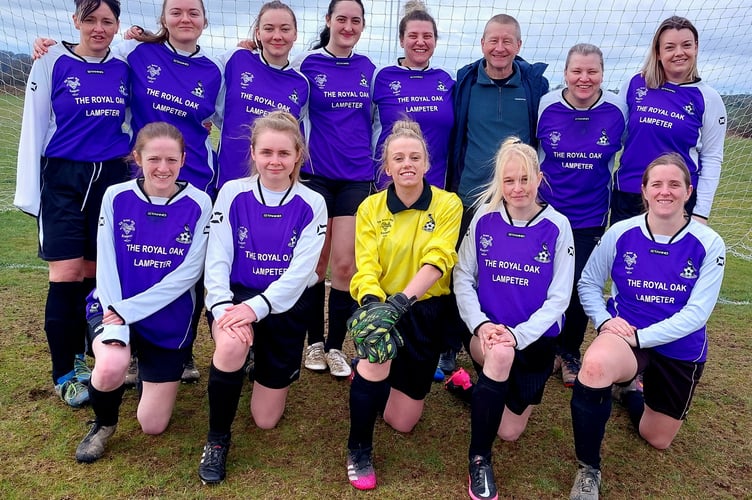
A Bronglais Hospital nurse has explained how she and her teammates saved her football coach’s life after his heart stopped during a training session.
As the Cambrian News reported, Lampeter Ladies FC manager Philip Powell, aged 65, paid an emotional tribute to Llanilar-based nurse and goalkeeper Amber Holland after recovering from cardiac arrest.
Bronglais Hospital nurse Amber Holland explains how she and her teammates responded to her coach's cardiac arrest
Mr Powell’s heart stopped on the evening of 26 January at Ysgol Carreg Hirfaen astro turf just outside of Lampeter – sparking a desperate attempt to save his life.


Though the retired engineer from Ysbyty Ystwyth cannot remember what happened, he says if it wasn’t for the instinctive actions of Ms Holland, aged 31, he would no longer be alive.
Ms Holland, who graduated from Swansea University with a nursing degree last year, coordinated the response calmly despite never having treated anyone in Mr Powell’s condition during her training or her time at Bronglais Hospital in Aberystwyth.
Mr Powell’s daughter Estelle Rose - who also plays for Lampeter Ladies - said it was an amazing team effort, but heroic Ms Holland led the way under intense pressure and acted as a model for other healthcare workers or first aiders faced with responding to a cardiac arrest.
The Cambrian News caught up with Ms Holland to discuss the events of that evening.
She is hoping to raise awareness about cardiac arrests and how to respond to them – as well as campaign to increase the number of lifesaving defibrillators available to the public in Ceredigion.
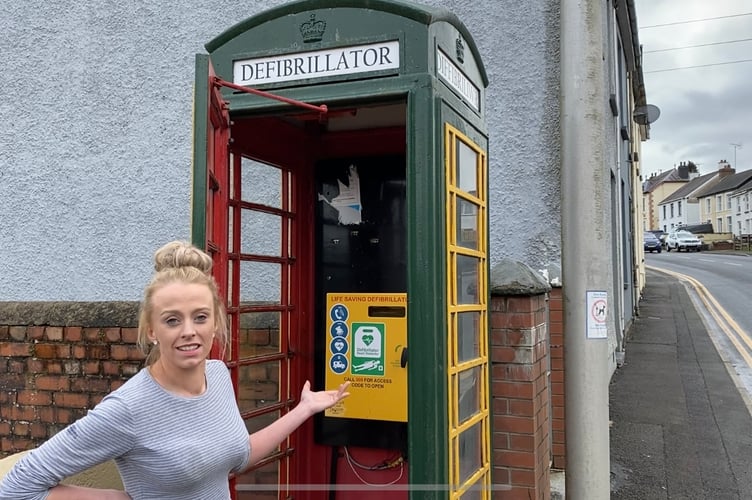
Speaking beside the defibrillator used on Mr Powell, installed at a phone box several hundred metres away from the school, she said: “It was used in a timely manner which is good – the sooner it can be used, the better the outcome for the patient.
“These are available in every town, there are apps, and you can even type into Google to find your nearest defibrillator.
“It’s so important to know where they are. For people who aren’t in the medical profession, there is always anxiety about using them.
“But they’re very basic. They’re in a box, there are two pads, and once the pads are attached to the patient it will then signpost you – through a machine talking to you – telling you what you need to do.
“And it will then pick up the heart tracing and will be able to tell if it needs to shock the patient back into a normal (heart) rhythm.
“These really do save lives. And we were so relieved there was one in close proximity to Phil for us to use it.”
With the help of the girls, Ms Holland put Mr Powell in the recovery position, checked his airways, listened to his breathing, identified an irregular pulse and then administered chest compressions for more than 15 minutes – after which she attached the defibrillator, which any member of the public can operate, and it shocked Mr Powell’s heart back into action.
Once the ambulance arrived, the paramedics strapped Mr Powell to an electrocardiogram which confirmed his heart had returned to a normal rhythm.
He was then rushed to Glangwlli Hospital in Carmarthen, was in a coma for 24 hours, and then sedated for a further two days.
Once he was stable, he was transferred to Morriston Hospital for further treatment. He now has two arterial stents, and an implanted defibrillator device.
The club has arranged for several club members to go on first aid courses following the events of that night – and has urged other clubs in the west Wales divisions to do the same.
Comments
This article has no comments yet. Be the first to leave a comment.