
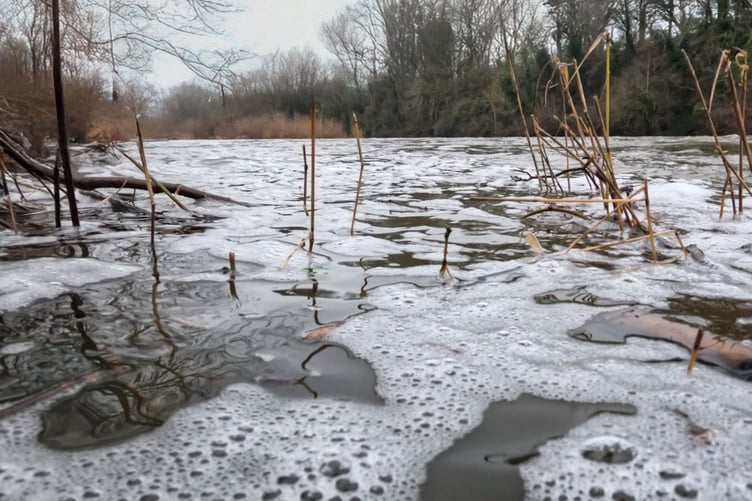
It’s encouraging to read that Powys County Council has granted the river Wye legal rights. Cabinet member for a greener Powys, Cllr Jackie Charlton, has put a charter before the council, following in the wake of Herefordshire County Council. The charter states, “The Rights of Nature movement is gaining momentum globally, with legal recognition of rivers and ecosystems in countries such as Ecuador, Colombia, and New Zealand.” This charter is non-statutory and, “does not create legal personhood for the River Wye.” Nor does it, “confer enforceable legal rights in the way seen in some international examples.”
The House of Commons and the House of Lords too are taking action on rivers. In the House of Commons Library this March a briefing paper notes that, “Proponents argue that recognising the rights of rivers improves environmental protection and can address environmental harm more directly than traditional approaches.” Baroness Natalie Bennett (Green) feels lucky to have drawn second in a ballot so she can put forward a private members bill. The bill’s title is very long but its starting premise is, “to recognise Nature as a legal subject.”

The river Wye starts in Ceredigion. Will Ceredigion County Council follow Powys? Monmouthshire and Gloucestershire are ready to sign. That would mean all councils from the source of the Wye to the mouth. I’m interested in what it will mean in practice.
Many councils back in 2019 declared climate emergencies as did the Senedd and the Westminster Parliament. Seven years on I’m writing this in the week with the hottest temperatures on record and still airport expansion is being allowed, economic growth appears to have no limits and solutions to the heat never seem to include tackling the causes of climate change. Heartfelt declarations are weasel words without practical action.
The class action lawsuit being brought by Leigh Day Solicitors against Avara Foods Ltd, Freemans of Newent Ltd and Dŵr Cymru is interesting to follow as is the debate over its effectiveness. What the claimants have in common with those who prefer to concentrate on campaigning, is to get the pollution out of the Wye, Usk and Lugg. I think the lawsuit is about forcing the companies sued to accept responsibility, not about the compensation payments as such compensation for humans won’t help these rivers. It needs to be spent on tackling the pollution. But a court case can apportion blame, hence demand remedial action. The same argument can be made about Dŵr Cymru who have just accepted a £44.7 million enforcement package, to be spent on improvements. Long-term river campaigner Angela Jones says, “My focus remains on ensuring decisions are informed by solid evidence and on driving practical action to address pollution at its source with urgency.” I agree with her that the origins of the pollution have to be addressed. Perhaps accepting responsibility will drive the practical action she’s after. I keenly await the outcome of the court case.



On a positive note, the Teifi Demonstrator Programme, consisting of around 20 partners, including Dŵr Cymru, hopes to restore the Teifi to its former glory. On their website they say they, “will look to improve water quality, enhance the river's resilience to climate change, and boost its biodiversity by exploring new ways of working together.”
I was at an event in Aberystwyth last week where I listened to Aberystwyth Town Bard Hywel Griffiths reciting a wonderful poem about one of Aber’s rivers. He’s inspired by rivers, their place in the landscape, the history of these rivers and how communities regard them. He has been awarded a Residency together with two other writers, his for writing and working with the Cleddau communities. The other two writers are Natasha Borton who will engage with the Dee, and Nasia Salwar-Skuse who will undertake the same work on the Taff.
In 2006 I was chair of the organisation Save Our Sea, set up to stop plans for oil and gas drilling in and near the Special Area of Conservation in Cardigan Bay. I got to know some activists in Brittany who had managed to create the Iroise marine park which involved individuals and organisations from all walks of life, including fishers, farmers and tourism interests. It was a long process. Collaboration was essential but what all involved had in common was a commitment to see the beauty of the area protected plus its cultural heritage.
Offering rivers some kind of legal status, taking polluters to court, practical help through monitoring, sending warnings about pollution incidents to swimmers, and ‘fining’ Dŵr Cymru, as well as input from poets, perhaps this combined effort will bring about an end to the dreadful pollution in our beloved rivers. It’s clear from the Iroise example that this kind of collaboration may take years. I hope that one day I’ll be able to see wild salmon return in good numbers.
Comments
We've recently changed our login process. If you have an account for commenting, you will need to re-register on the login window.
This article has no comments yet. Be the first to leave a comment.