
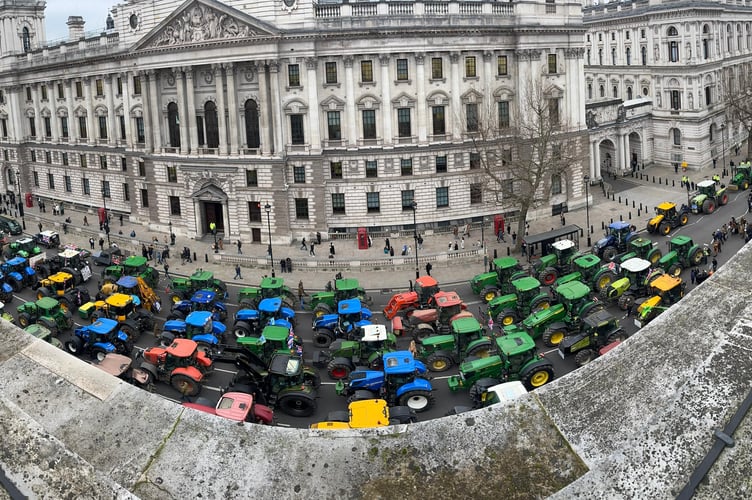
Farmers are the lifeblood of our rural communities.
Aside from producing high quality food, much more sustainably than in some other places, they organise events, like county shows and the Royal Welsh Show, bringing hundreds of thousands of people together around Wales every year. They help and look out for their neighbours and, especially in west Wales, they play a huge part in keeping the Welsh Language alive through Young Farmers’ Clubs and through their everyday work.
After the Sustainable Farming Scheme proposed by the last Welsh Government was delayed after protests by farmers, public focus rightly shifted more towards the plight they face.




Some supermarkets have been known to give farmers terrible deals for their produce, especially milk, which I have long thought to be insultingly cheap in supermarkets, compared to purchasing directly.
Over-regulation brings additional expense to an already challenging market, which can push some sectors out of profitability.
Trade deals with other countries like Australia and the US for meat risk undercutting our farmers and introducing low-welfare meat injected with growth hormones and other substances to our food supply.
The long-running and poorly addressed threat of bovine tuberculosis costs beef and dairy farmers hugely, with over 10,000 animals slaughtered annually in Wales due to it.
We see some farmers diversifying the use of their land, venturing into tourism, direct sale of products and even acquiring unusual animals. Where this works out, that’s great. But it doesn’t always help.
Some farmers feel forced to sell land to developers for building, corporations for ‘carbon credits’, or to organisations wishing to ‘rewild’ the land.
Every time that happens, part of the fabric of our nation breaks.
It’s important to remember that British and Welsh agriculture comply with some of the highest environmental and animal welfare standards in the World.
In an industry which is defined to many by moral dilemmas and concerns about its wider impact, our producers lead the world in ethical, clean food production.
Welsh farming is in ever-increasing danger, and its suffering will hurt all of us.
So what can we, as normal people, do?
When you’re in the shop, look out for the Welsh flag, and go for that product.
If you can afford to, buy basic products like milk and eggs directly from farmers, through roadside machines, honesty boxes and from markets. Cut out the middleman.
And demand that schools, hospitals, care homes and other bodies, especially those in the public sector, always go for local produce first.
There is no excuse for using New Zealand lamb or Thai chicken when we have perfectly good quality meat being produced here, to some of the best standards of welfare on Earth. Welsh lamb is globally renowned, and we should be proud of it.
Not to mention the thousands of air miles bringing those products into the UK. Supporting local helps the environment.
We must take responsibility for ourselves, as well as demand a better deal for farmers from the Government. We can’t fix everything ourselves. We will always want and need out-of-season goods and a broad choice of fruits, vegetables and cheeses, but agriculture is one sector where consumer choices can make a massive difference.
Support Welsh farming. Our communities, food quality and language depend on it.
Comments
This article has no comments yet. Be the first to leave a comment.