
Ten years ago, the phone call came out of the blue. “Your brother has collapsed in church; an ambulance is on the way”. I was his next of kin. Within a few minutes my son and I were on the road up from Devon. A follow up call suggested a probable stroke, and my brother on his way to Bronglais.
As a surgeon, I knew that an urgent CT scan was critical. A stroke is either caused by a bleed or a clot; if the latter, “clot busting” drugs can make a dramatic difference to recovery. But would a CT be available in one of the UK’s smallest acute hospitals on a Sunday morning? I had a vision of my brother being transferred south to Swansea or Cardiff, and us quite literally passing on the road.



As we sped up the M5, my son phoned Bronglais to find out where his Uncle was being taken to. To my amazement he had already had the CT scan, the results were available and the appropriate treatment started. This was just one example of the world class care my brother received during his admission to the Bronglais Stroke Unit. Subsequently I found out that Bronglais’ admission to CT scan time for stroke victims, was the best in Wales if not the UK. So called “experts” like to tell us that small hospitals can’t deliver good care; they are just plain wrong. With strong clinical leadership and management support, small hospitals can deliver the brilliant care my brother received.
We all have a reasonable expectation that our public services improve as time goes by. That is especially true with taxation at a post war high. The downgrading of the Stroke Unit in Bronglais represents exactly the opposite. Its going to hit elderly patients and their families across Ceredigion, south Gwynedd and the west of Powys too. Readers of this newspaper will be especially interested in Bronglais. But bear a thought for our compatriots in Pembrokeshire.
Acute (emergency) surgery is going to be withdrawn from Withybush Hospital in Haverfordwest. That is going to threaten the viability of the Emergency Department there, and the next thing is that the whole hospital becomes non-viable. If that can happen in Haverfordwest, it could easily happen in Aberystwyth. Make no mistake, these decisions are an existential threat to the delivery of decent healthcare to the people of rural Wales.
What warped logic has brought us to this? What on earth is going on in the heads of the Welsh Government? Do they really believe that turning mid and west Wales into a hospital desert represents an advance? Are they stupid, deluded, dishonest or a combination?
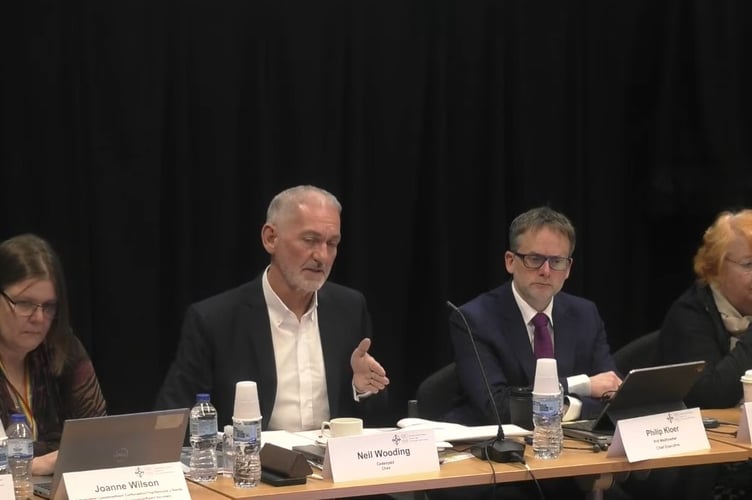
Hywel Dda Health Board tells us that these decisions aren’t just about money. Perhaps more pertinent is to ask whether a Health Board based on the old Dyfed area really works for West Wales? With the permanent population density skewed to the south east corner (Llanelli) is Hywel Dda ever going to deliver for its dispersed rural population? The ambulance time from Prince Philip Hospital Llanelli to Morriston Hospital in Swansea is 21 minutes (11.5 miles). That’s barely longer than my brother’s journey from Llanilar to Bronglais. Urban and rural healthcare delivery are different, and that needs to be reflected in how we manage them.
HDHB also talk about “fragility” of services. That’s a euphemism for difficulty in recruiting good clinical staff. Why is that? Is there something wrong with what life has to offer aspiring medics and nurses in Wales? Is Wales failing to produce and retain our own home grown clinical staff? Is the long term neglect of transport infrastructure improvements holding us back?
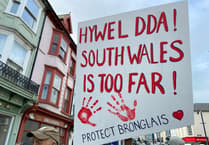
These big and difficult questions have got to be owned by our political leaders. But remember, we appoint them. So when we ask why our much loved and vital local hospitals are being downgraded, we need to look in the mirror. Petitions and protest marches are all very well but our chance to demand change comes in May. Will you bother to vote? Will you vote same old or for more socialism/different colour, and expect something better? Or are you prepared to think out of the box, to demand change and to vote for it?
It’s your healthcare.
Comments
We've recently changed our login process. If you have an account for commenting, you will need to re-register on the login window.
This article has no comments yet. Be the first to leave a comment.