

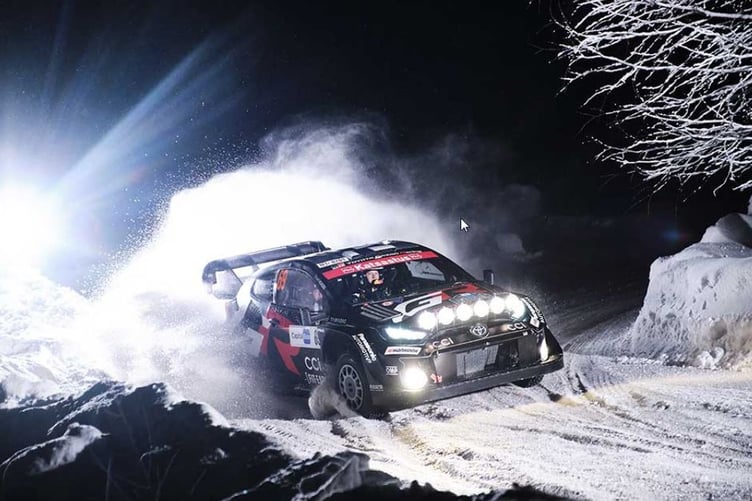
DOLGELLAU driver Elfyn Evans credits discipline—not theatrics—as the key to his third Rally Sweden victory, after once again mastering the WRC’s only full‑winter event.
He led a dominant Toyota Gazoo Racing 1‑2‑3‑4 in Umeå, a result that also lifted him to the top of the drivers’ standings. For a non‑Scandinavian, three wins on snow underline his status as one of the rally’s modern specialists.
“It’s quite a specialist rally, so for a non-Scandinavian, I don’t think that’s too bad,” Evans told WRC. “I’m very happy with this weekend.”
His success was built not on a single decisive moment but on meticulous tyre management. Sweden’s frozen base and Hankook’s studded rubber demanded precision, especially with temperatures plunging below -20°C and snowbanks offering less support than usual. Gravel patches tore at the studs.
.jpeg?width=209&height=140&crop=209:145,smart&quality=75)

.jpeg?width=209&height=140&crop=209:145,smart&quality=75)
“You have to be very efficient to go fast, especially with this tyre,” he explained. “It doesn’t like too much lateral load. You need to get the car as straight as possible on the exit. That’s something we’ve been focusing on.
“When you get down to the gravel at those temperatures, it’s a very tough condition for the tyre,” Evans added. “It’s been very cold and there’s been a lack of snow, so it made it particularly demanding.”
Although he assumed control on Saturday morning when Oliver Solberg ran wide and damaged a tyre, Evans highlighted Friday as the real turning point.
“If you look at Friday, I think I made a good impression on the rally straight away,” he said. “Starting second on the road maybe wasn’t the best position in the end. More than anything, it’s about being up to speed and feeling comfortable. That makes a big difference.”
Next month he faces a very different challenge: opening the road at Safari Rally Kenya.
“Kenya is not the worst place to open [the road], and especially if we’re in the rainy season it can actually be better,” he said. “There were some positive changes for me on gravel towards the end of last season. Some of the stages in Saudi showed that compared to where I struggled earlier in the year. Hopefully that feeling carries into Safari.”
That event will soon look very different. From 2026, the Safari Rally enters a new era, abandoning its traditional Nairobi start for a concentrated, high‑intensity format based entirely in the Great Rift Valley.
Scheduled for March 12–15 as round three of the season, the rally shifts its focus to the brutal terrain around Lake Naivasha—still the WRC’s ultimate test of survival.
The redesigned route packs 20 stages into four days, from the “fesh‑fesh” sand of Kedong to the fast savannah of Sleeping Warrior. Though no longer a thousand‑mile marathon, the Safari’s identity endures: it remains the most punishing gravel rally on the calendar.
For 2026, the ceremonial Nairobi start and Kasarani Super Special disappear in favour of a Naivasha‑only itinerary. Shakedown moves to Thursday morning at the new Nawisa test, with competition beginning that afternoon. Hankook’s Dynapro gravel tyres will face razor‑sharp rocks and deep sand, while Friday delivers an eight‑stage marathon including a reversed Camp Moran. The rally concludes Sunday with repeat runs of Hell’s Gate, the Wolf Power Stage framed by the Rift Valley’s towering cliffs.
Comments
We've recently changed our login process. If you have an account for commenting, you will need to re-register on the login window.
This article has no comments yet. Be the first to leave a comment.