

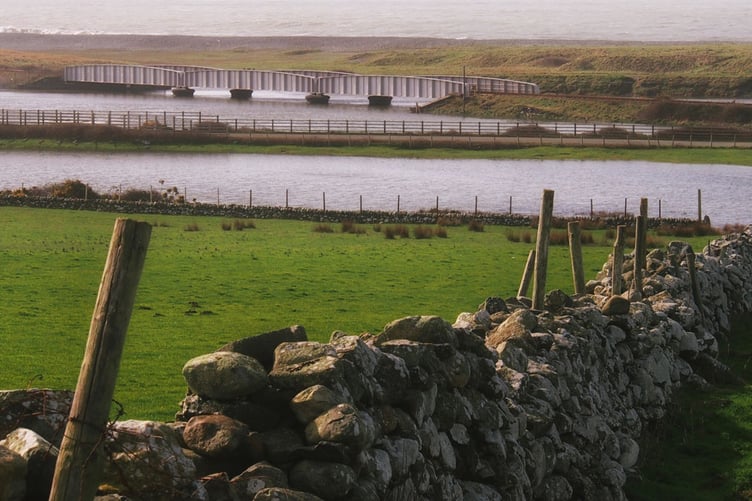
At their meeting on 19 January, Tywyn & District History Society continued the theme of 'one-occupation' towns in Wales.
There were two excellent presentations by members Hilary Harrison and Freddie Collier.
Hilary's focus was on Betws-y-Coed from its early history as a Roman lead-mining settlement to its present day position as a major attraction in the heart of Snowdonia for walkers and tourists from far and wide.
The village continued as a centre of other mining activities and several of the ancient miners' bridges have survived adding to its picturesque quality.

Its beauties were noted by early travellers to Snowdonia and inspired many artists such as leading watercolourist David Cox (1778-1842). Other artists settled in the village.
With the coming of the railways in 1868, Betws-y-Coed became accessible to a greater number of people. Despite its small population six luxurious hotels were built in the nineteenth century alongside many historic villas. It also remains as a thriving commercial centre.
After the break, Freddie Collier gave a presentation on Tywyn, Llanbedr and Aberporth's role in air defence training in the Second World War and Cold War.
Tywyn took on the supporting role for a very large air gunnery base at nearby Tonfanau, both logistically and with its Morfa airfield, which launched pioneer 'Queen Bee' drones (and later, piloted planes) as targets for Tonfanau's trainee gunners.
After the Second World War, National Servicemen were trained there.
Following their departure, junior cadet officers were trained there, and finally, Ugandan Asian refugees in 1972 found a temporary home.
When it closed for National service in 1965, its loss made a significant impact on Tywyn's economy, which reverted to farming and tourism.
Further up the coast Llanbedr worked with Aberporth, notably in the Cold War, providing target planes, while Aberporth tested ever more sophisticated interceptor rockets. Today, the role of both is changing as drones are again finding applications, both for peace-time and war purposes.
Questions followed the presentations, both of which were enhanced by the experiences and interests of the speakers and their excellent illustrations.
The next meeting, on 15 February, will be on the subject of the Roman interaction with the Celts in Wales, for which the speaker will be Dr Leah Reynolds from Cardiff University. All welcome.
Comments
This article has no comments yet. Be the first to leave a comment.