
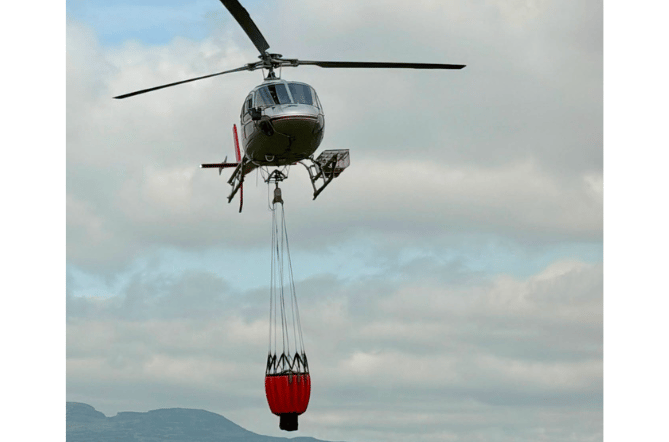
Questions have been raised about the delay in aerial support to tackle blazes across the region.
North Wales Fire and Rescue Service requested aerial support through Natural Resources Wales (NRW). The request was approved but helicopter support was unavailable for days due to demand from wildfire incidents elsewhere across the UK.
MP Liz Saville Roberts joined the call for helicopter help, saying: "Given the vast and remote area I repeat my call for helicopter support to assist firefighting efforts. The scale and inaccessibility of the Rhinogydd make this an exceptionally demanding incident. Every available resource should be considered.”
A helicopter arrived at Rhinogydd on 24 July, 12 days after the fire was first reported.
North Wales Fire and Rescue Service said then: “The helicopter has assisted crews in accessing hard-to-reach areas involved in fire, supporting efforts to contain the fire and prevent further spread.”
Reform UK Wales called on Welsh Government to provide an urgent briefing, and questioned the delay in securing a firefighting helicopter.
Reform Wales’ Deputy Leader Helen Jenner, MS for Bangor Conwy Môn, said: “People deserve to know exactly what is happening and what support is being provided. They will also rightly question the Plaid Cymru Government's crisis management arrangements, as serious questions remain over why aerial firefighting support was not brought in sooner during such a fast-moving emergency.
“Our immediate priority must be supporting those on the frontline and protecting local communities. However, once this immediate threat has passed, Welsh Government must be prepared to answer difficult questions about its handling of these incidents and the lessons that must be learned to ensure Wales is better prepared in future.”
Gwynedd Maldwyn MS Sian Gwenllian’s update on 23 July said a “multi-agency response” was managed through tactical co-ordination groups, activated on 15 July for Harlech, chaired by the Fire and Rescue Services, including Natural Resources Wales, the military and supported by Welsh Government.
She added: “Air cover and helicopter capacity has been a topic of significant interest, including whether it can be procured from the armed forces, or civilian/private sources.
.jpeg?width=209&height=140&crop=209:145,smart&quality=75)



“Firstly, I should emphasise that the armed forces have no UK-based capacity at all for aerial firefighting, so we are unable to ask for their support.
“I would also emphasise that providing general aerial firefighting capability for Wales is not within Natural Resources Wales’ remit. Their remit covers the Welsh Government Woodland Estate.
“Fire and Rescue Services lead the response to wildfire firefighting operations, including fire suppression, firefighter safety, incident command and decisions about tactics and deployment.
“There are varying views within the emergency services and associated agencies about the role of helicopter firefighting support, but it was requested by the Fire and Rescue Service at the Rhinogydd site.
“I intend to review the current capabilities available to fight wildfire, including aerial support, to identify what additional capabilities may be required, and what potential costs might emerge (recognising the context that these are UK-wide issues and will require discussions across the UK).”
Comments
This article has no comments yet. Be the first to leave a comment.