

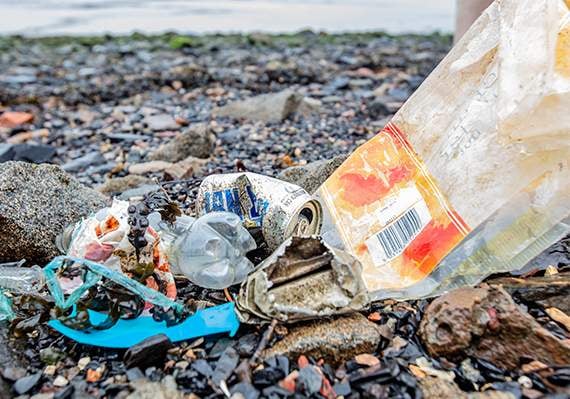
The Marine Conservation Society’s Great British Beach Clean is back, with a difference.
Rather than the usual weekend, this year’s event will take place for a whole week, running from 18 to 25 September.
This year, the charity’s flagship citizen science project is encouraging more people than ever to become organisers and set up their own beach clean and litter survey with friends, family or ‘bubbles’, in line with Welsh Government guidance.
For those unable to make it to the coast this year, the Marine Conservation Society is providing a downloadable ‘Source to Sea Litter Quest’ so that everyone can play their part in keeping our beaches beautiful even from afar.



-a-joyful-and-inclusive-c.jpeg?width=209&height=140&crop=209:145,smart&quality=75)
The Great British Beach Clean is more than just litter-picking - people become citizen scientists and carry out a litter survey, recording what they find on the beaches to help show a national and international picture of the most common forms of litter.
The Marine Conservation Society uses this data to call for policy change, tackling ocean pollution at its source.
During last year’s Great British Beach Clean weekend, citizen scientists across Wales collected over 400 litter items per 100m of beach, with volunteers all along the coast taking part.
Like many events, this year the Great British Beach Clean looks a little different.
Rather than encouraging volunteers to find a beach clean happening near them, the Marine Conservation Society is calling on individuals to adopt a 100m stretch of beach and organise their own beach cleans, with smaller groups of friends, family and ‘bubbles’, in line with government guidance.
This year the charity is hoping more organisers than ever before will take ownership of their local beaches to support the project and collect all important data.
The charity has made becoming an organiser, adopting a beach and doing the survey as easy as possible, with plenty of resources and guidance available on the Marine Conservation Society website.
Lizzie Prior, Beachwatch officer at the Marine Conservation Society, said: “As more of us are looking to stay local this summer and head to the UK’s beaches, it’s even more important that we all take ownership of keeping them beautiful for everyone.
"We’d love to see more people than ever before signing up to organise their own beach clean.
"The more organisers we have, the more beach cleans we can run throughout the week and the more data we’ll have to push for policy which will reduce ocean pollution in the future.”
Data collected by Marine Conservation Society citizen scientists from 26 years of the nationwide Great British Beach Clean has been instrumental in the introduction of the 5p single-use carrier bag charge, the ban on microbeads in wash-off products and the commitment to a deposit return scheme in Scotland, alongside much more.
This year, the charity hopes to collect data on personal protective equipment including gloves and masks to get a more accurate picture of the impact these newly commonplace items are having on the environment.
This year, the charity will ask volunteers to record how much personal protective equipment they find on the UK’s beaches, including gloves and masks.
Gill Bell, Wales programme manager at the Marine Conservation Society, said: “Whilst we all must take necessary precautions to keep ourselves safe, we all have a responsibility to dispose of these items appropriately.
"We understand the need for single-use plastic for medical reasons, but we don’t want the current crisis to slow or stop the planned measures to reduce non-medical plastic at source.
“We’ve all seen the huge amount of food and drinks waste being littered, an all-inclusive Deposit Return Scheme and an Extended Producer Responsibility system would make huge impacts on the volume of litter we see in the ocean, in our parks and across beaches.
"Over the last few months we’ve had to learn to do things differently. We can, and should, support systematic change and ask for ambitious policy to reduce the litter polluting our ocean and environment.”
Comments
This article has no comments yet. Be the first to leave a comment.