

Historical Society

WHAT is the connection between Owain Glyndwr, Prince Philip and Sir Billy Butlin? The answer was provided by Dr Dafydd Roberts at the November meeting of the society. In an entertaining and informative talk entitled Aberporth and Penychain – fun by the seaside? Dr Roberts traced the evolution of these coastal villages during the last century. Until the mid-20th century, Penychain consisted of little more than a farm and a few smallholdings. Those not engaged in agriculture went to sea or found work in the slate quarrying towns of Blaenau Ffestiniog or Bethesda. With the advent of the railway line from Bangor to Afonwen in 1867, there was an influx of visitors from along the North Wales coast but until the 1930s this had little impact on the local community which remained mainly Welsh-speaking and non-conformist. The way of life in Aberporth revolved around the sea. Small coastal vessels operated by local men and boys served the small farming communities inland. When the railways rendered these vessels redundant, locals joined merchant navy vessels operated by companies out of Cardiff and Liverpool – the so-called “Welsh navy.” By the early 1940s, there was a significant influx of day-visitors from the hinterland. On “Dydd Iau Mawr” in August, farming families packed the beaches, forming lasting friendships with local families who provided refreshments and accommodation. The Second World War revolutionised the economies and visual impact of both villages. The need for training camps, airfields, gun-nery sites, storage depots and harbours had a significant impact on many rural communities. In 1940 the navy established an onshore training camp at Penychain, named HMS Glendower (a reference to Owain Glyndwr). Among the thousands of trainees was the future Prince Philip. After the war, Sir Billy Butlin transformed the site into a holiday camp; thus the connection between the three men. By the 1960s there was a rail service from Swansea to Penychain and an air service from Speke airport. There was even a Butlins Eisteddfod. By 1994, now known as Starcoast, it was attracting over 100,000 visitors a year, and employing 150 people. In total it contributed almost £11 mil-lion to the local economy.Visitors to Butlins and Starcoast World tended to stay in the camp and impinged very little on local people. When they ventured out to local attractions they encountered a largely Welsh-speaking community. The fence around the camp was immediately opposite a Welsh chapel and on the Sabbath there would be an interesting encounter be-tween local worshippers in Sunday best and half naked holidaymakers across the road! Unlike Penychain, the military bases in Aberporth were not sold off at the end of the war. In 1937 a rocket firing range was estab-lished and in 1940, the Projectile Development Establishment (PDE) was transferred from Kent to the new site. By 1944, it employed 110 civilians and after the war, it became the Royal Aircraft Estab-lishment. The nearby RAF base also became a fully commissioned airport. The impact on the local community, both good and bad, was significant. Aberporth bucked the trend of rural depopulation in the 50s and 60s as a consequence of this military conglomeration. By the early 1970s, nearly 1000 civilians were employed on these sites most of whom lived locally. New facilities such as schools and houses were provided and civilian employees shared the extensive sporting and social facilities at the sites. The farming community did less well. By the 1960s, about a fifth of farmland in the area had been acquired by the military, increasing numbers of school leavers worked at the camp and fewer went into agriculture. The permanent presence of the military com-munity cut across the traditional behaviour patterns of Aberporth. English-speaking visitors who retired to live there permanently tended to be integrated into the community, but research carried out in the 1960s showed that relationships between the RAE and RAF staff and the tradi-tional community were more complex. With the passage of time, however, differences have become blurred.Dr Roberts was warmly thanked for his stimulating presentation.
Harlech in Action
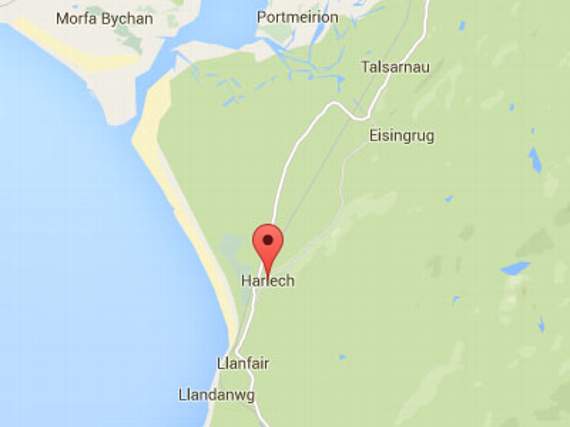
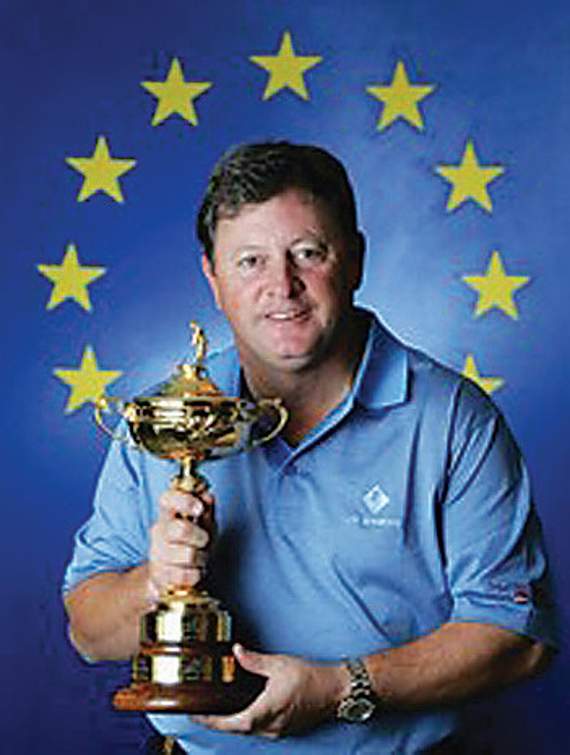
AN ACTION group has been formed to look at dealing with the issues which are affecting the community.Harlech in Action is an initiative suggested and supported by Ian Woosnam OBE, Woodie, as he is better known, who is a Welsh golfer, golf course designer and major-winning golf champion.Heidi Williams from Harlech in Action said: “We are thrilled Ian Woosnam is supporting and pushing forward this initiative for Harlech.“This initiative has already helped Harlech & Ardudwy Leisure with a near £50,000 debt with British Gas being reduced to a £5,000 payment – without this, the swimming pool could not have continued.“Our joint voice and vision is about bringing businesses, groups and services in the area together to bring back Harlech to the splen-dour it once enjoyed with the overriding word being action.“Current action being taken includes the lack of quality volume accommodation, the deteriorating high street and parking.”The community will be able to get involved with the group and put their ideas forward during 7 December to 13 December and can do so by visiting Harlech & Ardudwy Café, Llew Glas, Llandanwg Café and the old library.Other ways to get in touch are by e-mailing [email protected] or through their facebook page, Harlech2015.
WI
THE WI held their AGM on Wednesday, 11 November. President Christine Helmsley welcomed members and Meinir Lloyd Hones, the federa-tion chairperson.A report was given by S Maxwell regard-ing the book being published about Harlech which will be available later this month.The county letter was read and all relevant dates noted, especially the one in Bala on 28 November and the carol service to in Dolgellau on 4 December at 2pm before the AGM began.All members of the committee gave their reports.President, Christine Helmsley was selected; vice-president, Jan Cole; and secretary, Pat Turton. Annette Evans and Sue Williamson were thanked for their work the previous year.Unfortunately, Annette Evans had to resign from the committee.The president thanked everyone for their support over the last year.The federation chairman gave a short address and thanked everyone for their invitation to attend the meeting.There was an exhibition of members work which included paintings and many craft items.The next meeting has been changed from 9 December to Thursday, 10 December and will be held at the New Castle complex.
Comments
This article has no comments yet. Be the first to leave a comment.