

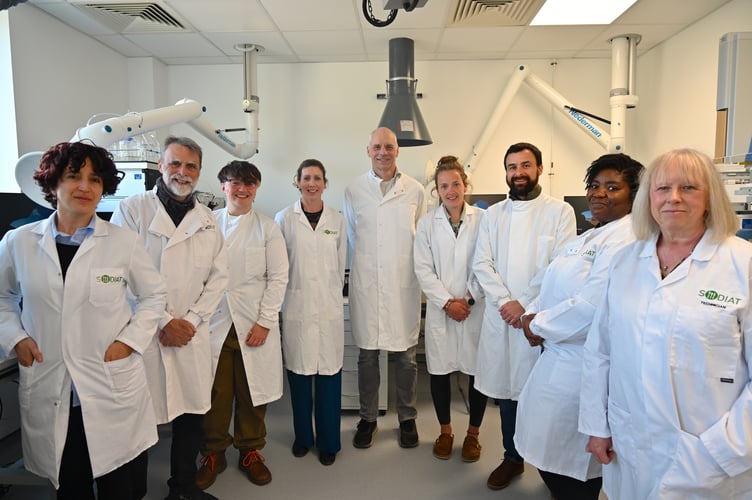
Scientists are recruiting adults from across the UK to take part in a trial to accurately track what they eat and drink in their daily lives.
The findings of their research could pave the way for better public health strategies to tackle diseases linked to poor diets such as type 2 diabetes, heart disease and some cancers.
Currently diets are measured by people completing complex and time-consuming nutrition surveys themselves and trying to remember exactly what they have eaten, but this can lead to unreliable results.
In their bid to find more reliable ways of tracking people’s diet, researchers are using a combination of tools including wearable cameras, blood monitoring devices and metabolomic analysis of urine samples, combined with apps for self-reporting.


.jpeg?width=209&height=140&crop=209:145,smart&quality=75)
The SODIAT-2 study is part of a wider five-year research project led by Aberystwyth University in collaboration with experts at the University of Reading, the University of Cambridge and Imperial College London.
A total of 133 adults are being recruited to take part in a five-week programme monitoring exactly what they eat and drink.
Participants will wear camera glasses to record what they eat and drink; provide blood and urine samples collected in their own homes to show what their bodies absorb from food; and complete simplified online food and drink questionnaires on their eating habits.
By comparing these methods, researchers aim to find out which combination of tools work best for studying diets in real life.
Dr Manfred Beckmann, lead Principal Investigator from the Department of Life Sciences at Aberystwyth University said: “One of the problems facing nutrition researchers is getting a true picture of people’s eating habits.
“To date, most studies have relied on participants remembering and recording the details of their meals but memory can be unreliable and hence the data is not always robust.
“Additionally, people often change their diet when they know they’re being observed.
“By developing a new methodology, we aim to get a much more accurate record of people’s diets which will help inform how governments and policy makers assess the success of efforts to improve people’s health and give better dietary advice.”
Dr Amanda J Lloyd from the Department of Life Sciences at Aberystwyth University added: “There is currently no single tool which can capture precisely every element of what we eat and drink, so we are employing a combination of techniques.
“The benefit of using urine and blood samples to test for 'markers' of food and drinks is that they give us objective data.
“Wearable cameras combined with AI software, and new simplified online tools for self-reporting also offer great potential to record diets.
“We have already put our methodology to the test in a pilot study carried out in two controlled laboratory environments but we will now see how effective our new tools are in monitoring exactly what people eat and drink in their daily lives and in comfort of their own homes.”
The research is funded by the Medical Research Council and the Biotechnology and Biological Sciences Research Council.
Comments
We've recently changed our login process. If you have an account for commenting, you will need to re-register on the login window.
This article has no comments yet. Be the first to leave a comment.