

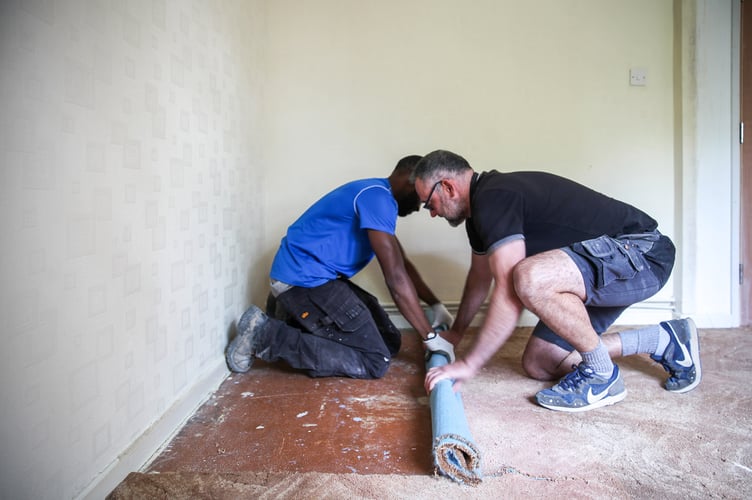
A new report by the Bevan Foundation finds that the shortage of social housing in Wales could be solved by using existing homes and buildings.
With one in every fourteen households in Wales currently on waiting for a social home, a new report published by Welsh thinktank the Bevan Foundation, working in partnership with Shelter Cymru, has highlighted the potential for existing dwellings and buildings to unlock thousands of social homes across the country.
In its report, Tenure change: turning existing dwellings and buildings into social homes, the Bevan Foundation sets out the scale of the challenge, noting that 6,285 people in Wales are currently living in temporary accommodation such as ben and breakfasts while they wait to be housed. And this figure includes some 2,500 children.
To help tackle this the Welsh government has worked towards the delivery of 20,000 new social homes during this Senedd term. A target that the government says will be delivered by the end of the 2026 calendar year. However, with levels of housebuilding at a historic low the thinktank notes that solving the housing emergency means exploring all options for the delivery of new homes.




Through analysis of existing properties, the Bevan Foundation has found that there were 22,528 homes in Wales for 2025/26 that have been empty for six months or more.
The foundation estimates that 3,600 to 4,500 of these properties are suitable for purchase as social homes.
The report notes that 150,000 social homes were sold under the former right to buy policy. About 41 per cent or 60,000 of these are likely to be rented privately and could be purchased by social landlords to return to the social housing stock.
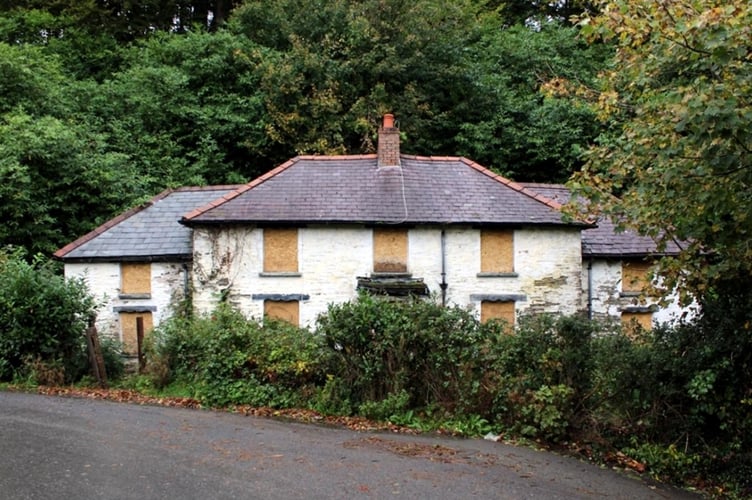
The foundation says that greater regulation of privately rented dwellings, second homes and holiday lets has reportedly led to some owners considering their investment options, which may provide further opportunities for purchase. It also outlines numerous benefits to repurposing existing properties as social homes, rather than building new. These include the fact that using existing buildings can deliver homes more quickly, and cheaply as well as the environmental benefits of improving the energy efficiency of private sector homes and reusing the embodied carbon already spent in existing properties.
The use of existing properties also provides an opportunity to provide homes in the heart of existing communities that will benefit from existing infrastructure. Realising the opportunity that these properties present does not come without challenge, for example the high standards in place for social homes in Wales, which stipulate strict requirements around criteria such as room sizes, prevent some properties being considered.
There are also issues around current funding arrangements and taxation, such as the new construction of dwellings being zero-rated for VAT purposes, while it is charged at the full 20 per cent rate for general refurbishment works. At a time when the need for social homes is as urgent as it ever has been taking a pragmatic approach to these challenges and working to find solutions has to be a priority. And the report makes a series of practical recommendations for overcoming barriers and providing new social homes at the scale Wales needs. These include reviewing the current standards for social homes to ensure that they contain more flexibility; supporting workforce skills development and calling on the UK Government to amend the tax regime.
Wendy Dearden, Senior Policy and Research Officer at the Bevan Foundation, said: “It cannot be right that, tonight, thousands of families across Wales will go to bed in cramped, unsuitable rooms in B&Bs while perfectly good houses sit empty across the country.
"As homelessness and waiting lists for housing continue to grow, it’s clear that Wales’ housing crisis can’t be fixed by building alone. We need to look at how we can use the stock we already have – whether that’s by refurbishing empty homes and buildings or purchasing ex-council houses and privately-rented homes – to provide social homes at the scale that’s needed.
"In our research, we found great examples of local practice, and a real enthusiasm to bring existing properties into use. Unfortunately, current regulations, practices and funding arrangements do not support converting properties at the scale that’s needed.
"Our report provides practical recommendations on how we could change this and massively increase the supply of social homes. We want to see the next Welsh Government put these recommendations into practice and make sure that everybody in Wales has somewhere they can call home.”
Robin White, Head of Campaigns at Shelter Cymru, said: “Through our work as a provider of housing advice and advocacy we see every day the impact that a shortage of social homes is having for people in Wales.
"We see it in struggles faced be the thousands of people trapped in temporary accommodation, the families reliant on a broken private rented sector and those who have been stuck on social home waiting lists for years.
"Changing this and ensuring everyone in Wales has access to a safe, secure, suitable and genuinely affordable home has to be a priority for the next Welsh Government. With the conversion of existing homes into social homes something that has a clear role to play in that.
"We urge all political parties in Wales to consider the findings of this report and to take onboard the practical recommendations being made. The report forms part of a series of research reports the Bevan Foundation and Shelter Cymru are producing in partnership to examine the use of temporary accommodation in Wales and move people into permanent homes by providing more social housing."
The foundations highlights that in Scotland, the Scottish Empty Homes Partnership is a national programme that works to bring privately owned empty homes back into use across that nation. It is funded by the Scottish Government and delivered by Shelter Scotland.
It supports the Scottish Government’s goal of returning long-term empty homes to use as affordable housing where possible. The objectives of the partnership include encouraging every local authority to adopt a strategic approach to bringing empty homes back into use; promoting evidence-based benefits of bringing empty homes back into use to encourage diverse involvement in empty homes work across Scotland; supporting a network of dedicated Empty Homes Officers through the provision of training and best practice sharing; running the Empty Homes Advice Service which provides advice and support primarily to members of the public affected by issues relating to empty homes; and running the recently launched National Matchmaker scheme that matches empty homeowners to purchasers through a dedicated property portal.
The foundation suggests that similar programmes would have an immediate effect in Wales.
The foundation has highlighted opportunities that exist in Wales to make use of existing dwellings and buildings to boost the supply of social homes. The logical place to start is the wasted resource of empty dwellings. However there are also opportunities to return homes into the social housing stock which have been lost through the right to buy, as well as to take advantage of changes in private ownership. It also notes the numbers of vacant buildings within existing communities that could be re-purposed where additional homes are most needed.
"The benefits of working with existing building in this way are often overshadowed by the perceived advantages of building from new, but that does not mean that they are not insignificant. Working with existing dwellings can deliver homes more quickly as well as having the potential for cost savings. There are also wider environmental benefits to improving the energy efficiency of private sector homes – which are lagging behind the social sector – and reusing the embodied carbon already spent in existing properties," the report says.
"The use of existing dwellings and buildings provides an opportunity to provide homes in the heart of existing communities and to benefit from existing infrastructure connections. The barriers to tenure change and re-purposing are however also significant, although we would argue not insurmountable if viewed with pragmatism and flexibility. There are clear steps which the next Welsh Government could take to improve both the financial and special support required.
The foundation says that a significant barrier to address however, is the policy conflict between aspirational, zero carbon standards for any homes brought into the social housing stock and the need to boost supply. "It is right to ensure that tenants have the guarantee of a good quality home, but we must be pragmatic and led by what tenants need and want. Current standards are driving up costs and making many existing dwellings unsuitable for acquisition – including former social homes of the same design and layout as those already owned by social landlords," the report notes.
Calls for broader flexibility or a lowering of standards for acquisition have been met with a Welsh Government response that they do not want to create two-tiers of accommodation standards. We would counter this argument by making the case that temporary accommodation could itself be regarded as a “second” tier of accommodation. Here, thousands of households may experience accommodation which does not even meet the lowest standards as they wait in hope for a gold standard social home.
The foundations wants the next Welsh Government to fully realise the potential of existing dwellings and buildings to address the shortage of social homes.
It wants the new administration to ensure that tenure change opportunities are maximised and the suitability of existing dwellings and conversions for social homes needs to be assessed on a property-by-property basis.
“The merits of each individual dwelling should be assessed against a set of guiding principles, allowing for balance between physical factors such as room sizes with wider considerations on demand and suitability,” the report says.
It believes any new dwelling must, however meet energy needs. The foundation singled out the Ty Gwyrddfai Decarbonisation Hub in Penygroes, Gwynedd, created by Adra housing association, Bangor University, and Grŵp Llandrillo Menai to drive retrofit skills, innovation, and low-carbon housing solutions across north-west Wales.
Opened in 2024, it transforms a former industrial site into a centre for training, research, and community-focused decarbonisation work. Tŷ Gwyrddfai accommodates the head office for Tîm Trwsio, Adra’s in-house repairs and maintenance contractor which employs over 150 staff. The on-site training facilities are managed by Busnes@LlandrilloMenai, the commercial arm of Grŵp Llandrillo Menai.
They deliver tailored decarbonisation and construction skills to young people and existing members of the construction workforce, especially in areas such as exterior wall insulation, installation and servicing of solar panels, air source heat pumps and battery storage.
The Hub also provides Bangor University with a research and development facility dedicated to testing and trialling new decarbonisation technology and materials, including two chambers designed to replicate the inside and outside of a house for climate testing.
Comments
This article has no comments yet. Be the first to leave a comment.