
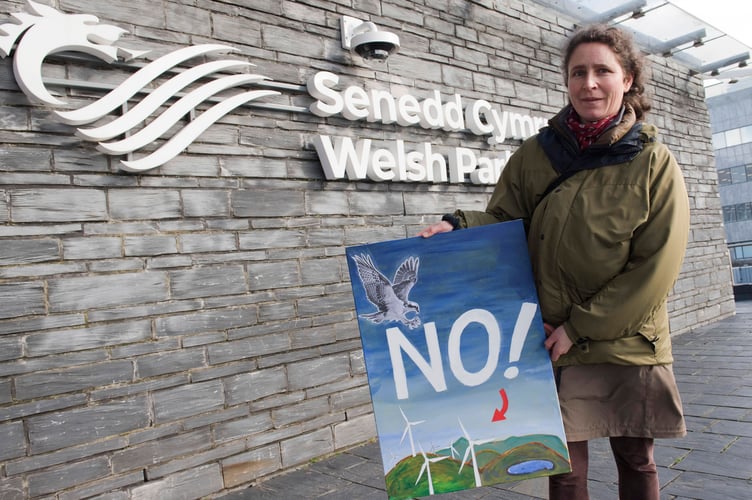
Make no mistake, the environmental crisis is real, and it's knocking on our doors - or rather, breaking them down.
Communities across Wales are arming themselves with shovels, sandbags and pippettes, doing what they can to save their homes and their hills.
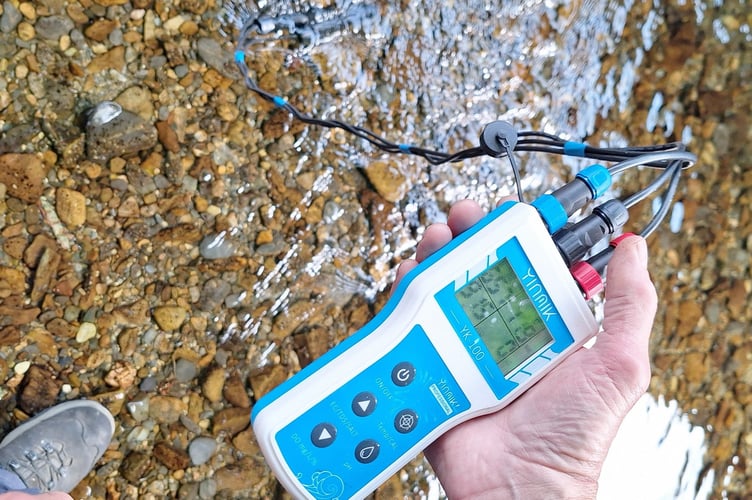
Wellies are being donned and free time is given to plant trees to stop flooding, citizen scientists are wielding test tubes analysing river pollution levels to hold sewage companies accountable, and groups are presenting their own solutions to local authorities on how they want flood risk managed.
It comes in the face of climate change impacting people’s lives on a daily basis, from flooded homes due to torrential rain and rising seas, to increased wildfires and water shortages in summer.



Beyond global heating, water companies are continuing to leak untreated sewage into our waterways at a diabolical rate each year, made worse with increasing storms.
And then there's the mining legacy - with hundreds of mines left completely untreated, seeping tons of heavy metals into our soils and waterways each year.
From lead poisoning to house insurance prices, communities are doing what they can; with this backdrop of incredible levels of action from residents, how will your elected officials step up?
This May, we have an opportunity to change things with the Welsh government Senedd elections: on Thursday 7 May, people will vote for who represents them, choosing who they think will best take care of this nation, its people and nature.
Here is what every political party would do to stem the flow...
The water knocking at your door
It’s safe to say this winter has been wet – wetter than usual, with some parts of Wales having rain every day this year up to early February.
It’s affecting Wales’ culture - seventy Welsh rugby matches were called off in a single day in December because of downpours.
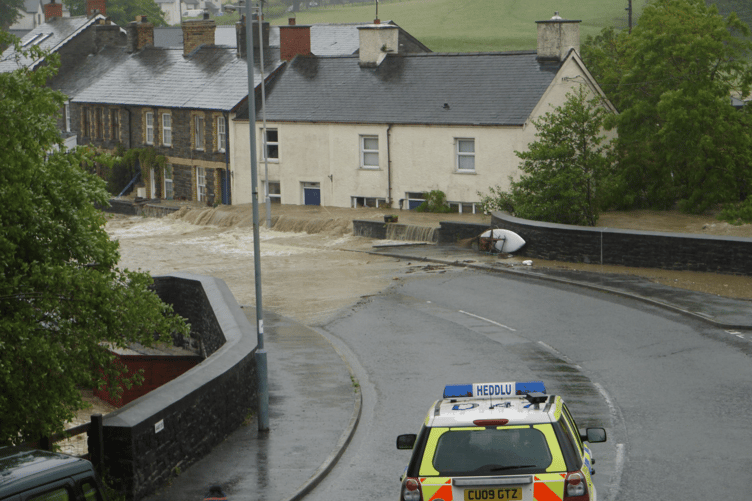
Mick Fothergill described the flash flood he experienced in Talybont as “devastating”.
.png?trim=0,0,1,0&width=752&height=500&crop=752:500)
Watching their house flood from the pub, the 76-year-old said: “It’s hard to explain the feeling of hopelessness, helplessness and disbelief that it’s happening to you.
“I’d never seen anything like it.”
A new report from Friends of the Earth Cymru revealed that close to 800,000 people in Wales are at risk of flooding, 23,900 in the constituency of Ceredigion Penfro.

10,100 are at risk from rivers and seas – Aberaeron town recently got a high-profile investment from the Welsh Labour government to protect them with new sea defences and a breakwater.
Not everyone is so lucky, however – further up in Fairbourne, the government has said it has done all it can to protect the village from encroaching waters.
What your candidates would do about flooding
Seven parties and two independents are running to represent Ceredigion Penfro, covering Ceredigion and Pembrokeshire - one of 16 new constituencies created after maps were redrawn as part of voting system reforms.
The Welsh Liberal Democrats did not respond to the Cambrian News’ requests for comment.
Paul Davies, Welsh Conservative MS who is running for re-election, called for the government to take notice of local solutions that already exist: “The community in Newgale has developed a great proposal for the A487 that’s affordable and environmentally sensitive, and yet the local council is not yet supporting it.
“Where local solutions exist, they should be supported and fully explored.”
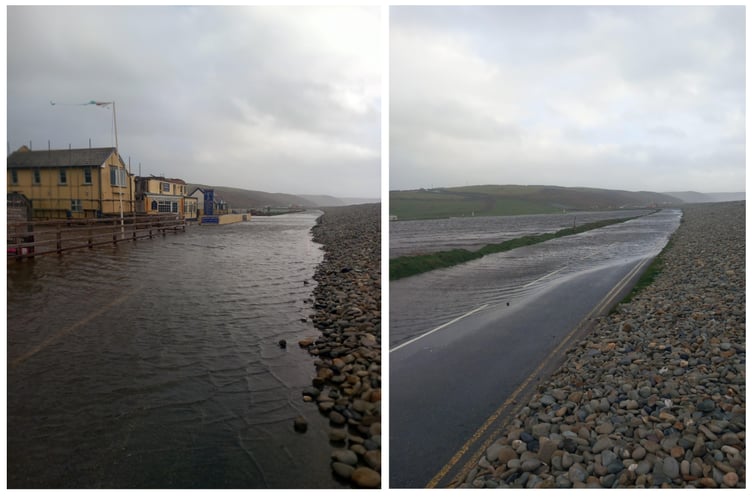
The community has created a proposal to address the coastal erosion impacting the road in the flood-hit village, which is cheaper than current plans.
Paul Haywood-Dowson, independent candidate for Ceredigion Penfro, said the priority must be on resilience in planning: “Investment in maintaining and dredging rivers where appropriate, rather than allowing silt build-up to increase flood risk.
“A review of planning policy that has permitted building in known flood-risk areas.
“Better maintenance of culverts, drainage systems and rural roads, which are frequently neglected until a crisis hits.”
On this last point, he’s spot on; 13,800 people in the constituency are at risk of flooding from surface water – flooding that occurs when heavy rainfall overwhelms drains and sewers.
Reform UK hasn’t announced its candidates for Ceredigion Penfro, but has promised there will be “a full slate of candidates everywhere”,
On all the issues we put to Reform UK, their spokesperson had this to say: “The pollution of our rivers has shamed the Welsh Government, and it’s time to clean up our waterways.
“As for flooding, despite hugely destructive flooding in Wales just last year, we’ve not seen sufficient investment into flood defences.”
When the Cambrian News pressed Reform UK on exactly how they would secure investment for flood defences, their spokesperson said their manifesto for Wales would be published “in the coming weeks”.
Out of the 19 policies listed on their website, they mention “restoring”, “defending”, and “protecting” Britain, “embracing technologies of the future” and supporting the “rural economy”, but nowhere does it mention the nature or climate crises.
A brief note on Net Zero
You might have heard Reform UK waxing lyrical about Net Zero - policy 8 calls to scrap Net Zero “driven by bad ideological policy”, to cut energy bills, but would expand domestic energy production.
The Welsh Labour government is aiming for Net Zero by 2050.
Net Zero means that the amount of greenhouse gases like Co2 produced by Wales (by things like big industry, landfill, transport and farming) is balanced by the amount of gases removed from the atmosphere (by forests, peatland and carbon capture technology), meaning that Wales’ contribution to climate change would technically be zero.
The UK’s current Net Zero policy pushes the transition from polluting methods and industries such as using oil or gas as an energy source, to renewable energy sources like wind and solar.
So Reform’s call to cut Net Zero targets whilst “embracing technologies of the future” seems a little contradictory.
The sewage scandal
Water companies dumped raw sewage into Welsh rivers and seas 107,768 times in 2024, totalling 886,422 hours of pollution.
There are 8,760 hours in a year, so that's the equivalent of 101 years of continuous sewage discharge.
Ceredigion Penfro had 163,441 hours of raw sewage dumped in 2024.
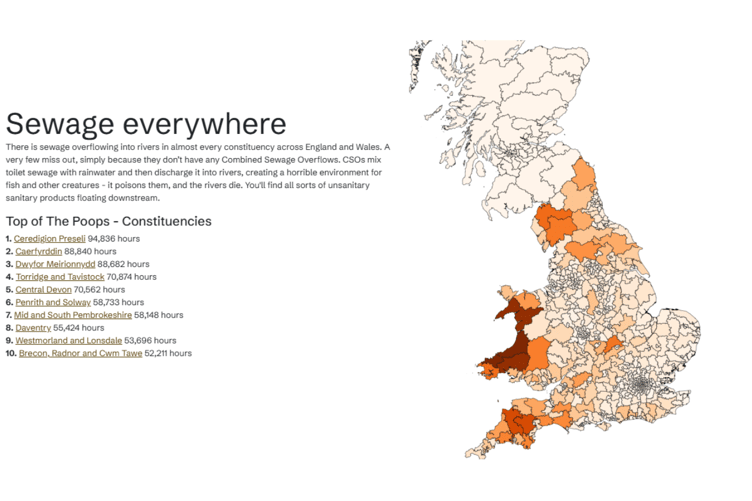
Water companies issue raw sewage into waterways as a failsafe during storms to prevent sewage backing up into houses and streets.
Dŵr Cymru (Welsh Water) said Wales receives a lot of overflow due to the high levels of rain the country experiences, adding: “We are seeing an increase in severe weather events linked to climate change.”
A spokesperson added that whilst the total removal of storm overflows was “unaffordable”, the company is investing £2.5bn on projects to improve the environment, including £889m on improving storm overflows.
As one of the largest water companies in the country, the Wales Green Party would bring Dŵr Cymru into public ownership to make it “fully accountable” and strengthen Natural Resources Wales (NRW) enforcement capacity.
Amy Nicholass, lead Ceredigion Penfro Green candidate, said they would use the sustainable farming scheme to implement nature-based solutions across landscapes, working across communities, companies and governing bodies and the new Office for Environmental Governance Wales to address flooding and pollution collectively.
She said: “This would aim to slow down the flow of water from heavy rainfall into the sewage system and prevent surface flooding. A good example is in Talybont where local people have planted hundreds of trees thanks to support from local farmers.”
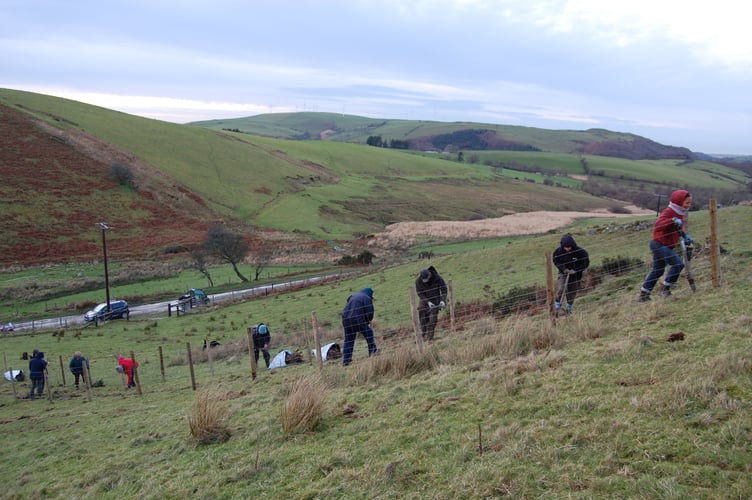
Residents have joined forces with farmers and landowners in Talybont to plant over 100,000 trees above the village to address flooding.
Plaid Cymru’s Elin Jones MS is campaigning for re-election for Ceredigion Penfro, who stated that Plaid has “long called for” and is committed to establishing a Wales-specific regulatory body to hold water companies and polluters accountable.
Plaid would also enforce new rules to ensure that water companies' bonuses were reflective of the performance of water companies, “so those responsible for performance failings and deteriorating service quality aren’t rewarded with swollen pay packets”.
It comes after national outrage that the boss of the not-for-profit Dŵr Cymru received £892,000 in pay and bonuses in 2021.
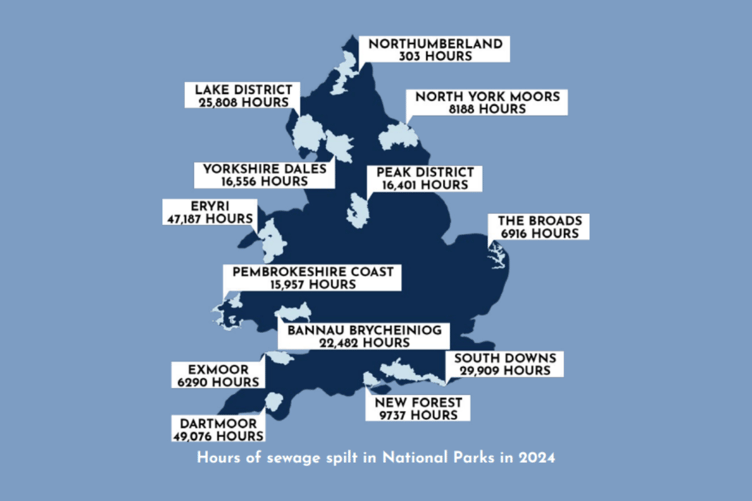
England and Wales’ water company economic regulator Ofwat introduced new rules in June 2025 requiring ‘performance-related pay’, so far blocking £4m in potential bonuses.
Elin Jones added: “Environmental threats such as flooding, landslips, contaminated land, and pollution show the climate and nature emergencies aren’t remote, far-off prospects, but are affecting our ways of life in the here and now in Wales.
“The condition of our rivers in Ceredigion Penfro and what it means for our communities is proof of that.
“Taking action to protect and strengthen our environmental resilience is essential for the future of our communities.
“While some parties choose to ignore the issues, Plaid Cymru knows that putting off urgent action to future governments isn’t an option: we must act now, and act radically, to save our way of life.”
If re-elected, Welsh Labour states they would continue with the establishment of a new water watchdog, creating a standalone body to replace Ofwat in Wales to become both an economic regulator and system planner for water in Wales.
This would include long-overdue upgrades of our Victorian sewers, which water companies blame as part of the reason Wales’ water is so often polluted.
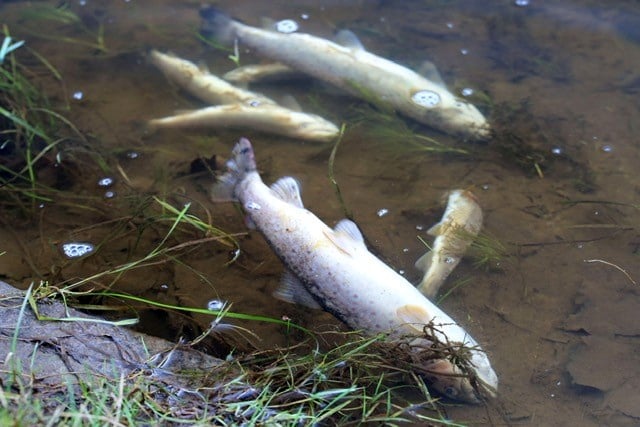
This has been criticised– NRW is already meant to hold polluters to account, with Conservative MS Janet Finch-Saunders, stating: “After 27 years of Labour and Plaid Cymru mismanagement, it’s hard to believe that by simply creating a new water regulator we will suddenly see cleaner rivers in Wales.”
Welsh Labour said they are tackling climate change and pollution “head on” and would also bring in the Clean Water Bill, part of the response to a major review published last year calling for an overhaul of the water industry in Wales.
The poison beneath our feet
The Friends of the Earth Cymru research reveals something scarier than numbers, showing a complete lack of data on contaminated lands from former industrial sites, mines and disused landfill.
A spokesperson said: “Wales has a proud industrial heritage, but it has left behind a legacy of contaminated land. As public information is incomplete and difficult to access, it isn’t possible to identify accurately how many there are or provide details on the risk to human health or nature.”
They list out-of-date Contaminated Land Strategies in Gwynedd and Powys (2002 and 2012) – Gwynedd has an online public register with one entry, but their research identified over 45,000 potentially contaminated sites in Wales, with almost none inspected.
Toxic levels of lead were found in farm eggs in Ceredigion, one of the worst-affected areas in the UK for metal mine pollution.
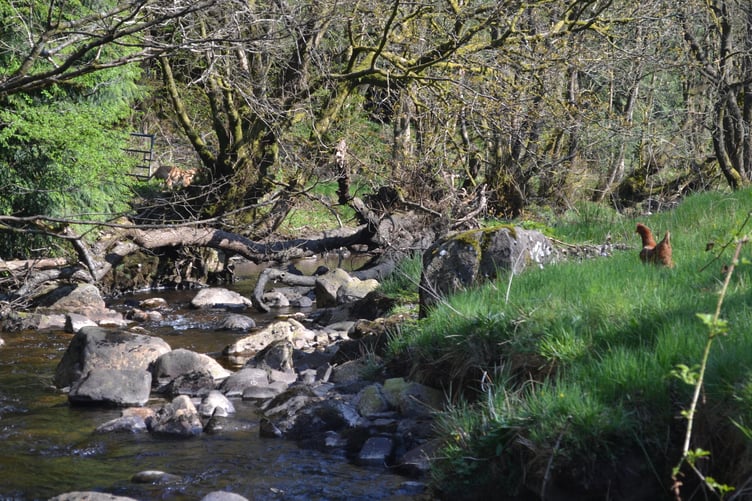
Little action has been taken; 500 tons of metals leak from just 129 mine sites in Wales annually – there are 1,300 known metal mines in Wales, so the reality will be far worse.
This has been branded as a potential “public health scandal” in the making.
Since 2002, only one mine remediation project has been completed – Ceredigion's Frongoch mine.
Even this can’t be considered a success, a 2016 study found 16 tons of metals were still released from Frongoch each year.
Welsh Labour government actually withdrew funding for Contaminated Land Inspection Strategies several years ago – Conservative MS Paul Davies said he would make resources available for local authorities to address contaminated sites.
Plaid Cymru MP for Ceredigion Ben Lake said after a metal mining evidence session that relevant bodies should “convene without delay to identify action necessary to mitigate any risk to public health... There is not a moment to lose.”
Reform UK leader Nigel Farage said he would allow coal mines to reopen if the party took the Senedd this May, which Greenpeace criticised as having “as much chance of success as resurrecting dinosaurs”.
To vote on 7 May, you must be 16 or over on election day, be a British, Irish, EU or other qualifying citizen, and live in Wales.
You must register to vote by 20 April - https://senedd.wales/senedd-election-2026/voting-and-senedd-elections/how-do-i-vote/
Friends of the Earth Cymru has created a tool to see the local data on environmental issues in your constituency – get your data on their website- https://action.friendsoftheearth.uk/act/senedd-election-constituency-data
Comments
We've recently changed our login process. If you have an account for commenting, you will need to re-register on the login window.
This article has no comments yet. Be the first to leave a comment.