
Like many people I listened with disbelief to Andy Burnham’s statement regarding the oil fields in the North Sea, Rosebank and Jackdaw. He argues for being pragmatic, saying, “The question isn’t whether Britain will still be using oil and gas, the question is where does it come from.” His new Secretary of State on Energy Security and Net Zero, Miatta Fahnbulleh, is being urged by climate action groups to say no to drilling in those two oil fields. ClientEarth have told her in an open letter that “this is your first test on climate.”
The fires and droughts we’re experiencing in Europe have come hot on the heels of storms and floods. Watching trees go up in smoke is devastating. It’s sad for the trees but also the wildlife. More than that, such fires generate the feedback loop that climate scientists have been warning about for decades. Basically, a warmer planet causes more wildfires which heat the atmosphere, due to the massive release of the stored carbon as carbon dioxide. Another feedback loop is the melting icecaps, reducing the reflection of heat, absorbing it instead, causing more warming.
Don’t think that nuclear power is the answer. In France the cooling water was too warm hence some plants were shut down. In Romania, the river Danube is at record low levels and is being forcefully diverted to supply cooling water to some of its nuclear plants. We need renewables and make reductions in energy usage. We, the citizens, must have a say in whether there should be data centres and AI as they require massive inputs of water and energy.

We should all be scared, very scared. Mainstream politicians keep telling you that you can have what you want at a price you like. Keep that economy oiled and growing, blame the last 40 years of free-market economics for all our woes, ignore why we had an enormous financial crash in 2008, hark back to the glory days beforehand. I hear all these statements from such politicians and weep.
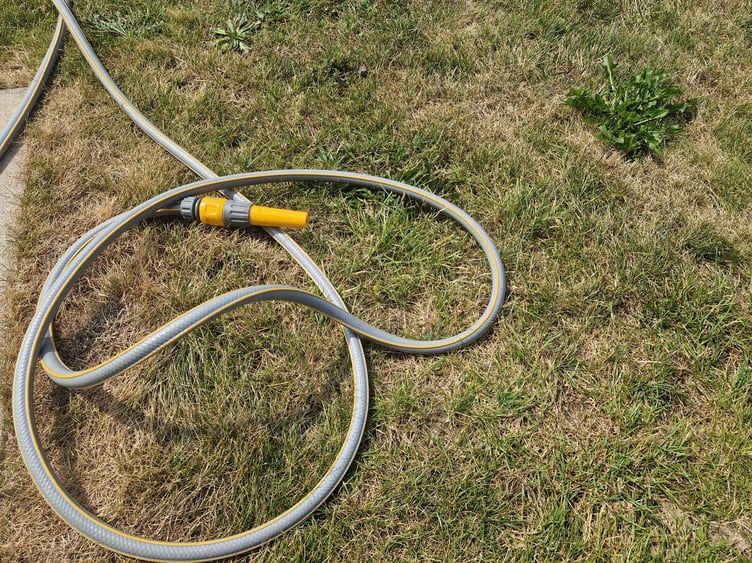
Ignoring the science will lead to climate chaos. We should transition sensibly and urgently. Companies like Dŵr Cymru should be prepared, not have customers suddenly finding themselves without water. The water shortage was predictable. A hosepipe ban was only called once many of us didn’t have a drop in the tap. Our supply ceased on Wednesday 15 September, water finally reaching our taps a whole week later. Dŵr Cymru offered varied reasons, from a burst pipe in Llanarth to excess demand. They delivered bottled water in a most disorganised manner, water that came from the depot in Devon.
An average household uses 140 litres of water per person per day. Ours is 100 per person but we have 8 waterbutts as we grow most of our vegetables and fruit. These butts were almost empty. The bottled water amounted to less than 100 litres for a week for two people. We learned to save every drop, catching it from hands and vegetable washing so we could flush the toilet, didn’t wash up for three days, did no washing at all and couldn’t have a shower.
For a person who tries avoiding single use plastic, always filling up my own metal container from the tap, I was irked having to put two bags of plastic bottles with the recycling. Dŵr Cymru should’ve put a hosepipe ban in much sooner. Planning laws could be tightened, requiring every dwelling to have as many butts as can be accommodated. Tourism is great but the infrastructure for the massive influx every year isn’t there.
Most of all, we must address the causes of climate change, reduce our carbon dioxide emissions. Having no tap-water for a week was difficult but we got through. We can’t say the same for farmers. Watching the parched land, listening to livestock begging for a bit of green, that’s really painful. Food shortages are on the cards. That’s the way of things if production is down by a large margin and farmers are feeding their animals winterfeed in August. Two plus two does not make five. We all have to be realistic. Furthermore, food prices are set globally. Hence many farmers will struggle financially. Urgent changes to farming practice are needed, regenerative, which means putting heart into soils, and lower animal stocking levels are required.
We’re lucky to live in a village where people are kind and helpful. We were also equal in not being able to do the washing or the washing up, all rationed to a few bottles a day. Perhaps it’s time to ration properly, not just water but also energy. Households could have a certain number of units cheap and pay massively for extra units. Most people clearly cannot restrain themselves voluntarily so rationing may be the rational option or chaos is bound to ensue.
--Right-Victoria-Bond-the-Director-of-CLA-Cymru-(P.png?width=209&height=140&crop=209:145,smart&quality=75)


Comments
We've recently changed our login process. If you have an account for commenting, you will need to re-register on the login window.
This article has no comments yet. Be the first to leave a comment.