
I spent 20 years writing and editing for daily newspapers in Toronto and Ottawa, another decade based in Dubai doing the same, and then seven years covering Europe from Spain. I’ve seen it as cold as -50C and as hot as 56C.
I’d take the cold over hot all day long.
You can always add another layer of clothing and there’s little difference between -10C and -50C except if the wind blows.
When it’s hot, there’s only so much you can take off and my belly fat doesn’t do well in the sun.
With events unfolding across the Middle East for the past four months, I’m often asked now if I miss the days in the field covering the mayhem.
In truth, yes, a little. But I don’t run as fast as I used too, I am a bigger target now - given the belly fat – and I had a good run at it.
I’m often asked if what I saw affected me.
In truth, yes, a little. But I also feel privileged to have seen and been there and to have met people at their most vulnerable.
I have sat with princes and prime ministers and am lucky to get offered a cup of coffee. But in a refugee camp on a disused airfield in Jordan, with 300,000 Syrian refugees living in tents, the most humbling meal is to sit with a family with eight children, grandparents and relatives, who have only one pot of green bean and lentil curry. And they won’t eat until you, their honoured guest, have reached into the pot first.
I rewatched that SAS Rogue Heroes series on BBC iPlayer recently, and one of the first raids the Desert Rats undertake is on an airfield in Al Baida in eastern Libya.
.jpeg?width=209&height=140&crop=209:145,smart&quality=75)

I am still affected by my visit to Al Baida during the civil war. Gaddafi forces took about 95 people hostage and took them to the small terminal – more like a warehouse than an airport – while they waited for transport planes to come. As soon as the planes landed, they put the hostages up against a wall and opened fire. I was there about 40 minutes after it happened, there was still cordite filling the building, and when people are fatally shot, as well as the blood and guts, bowels also give way.
I watched as dozens of bodies were placed in grey-green woollen army-issue blankets and dragged away for quick burial as is Muslim custom – and the heat too made that a necessity. The smell of blood, murder and gun smoke are still with me. I sat outside and cried like a baby for an hour. Then the reporting instincts kick in and it becomes the press’ duty to report accurately what just happened. And in many ways, that reporting process is almost cathartic – part of the ability to move on. I don’t mean that to be cruel should you think it is. No – but it is a coping mechanism.
There are some people I can never forget – for good and regrettably bad reasons.
I was in New Zealand for a couple of weeks for my daughter’s wedding in Queenstown in 2019 when a lone gunman attacked two mosques in Christchurch and murdered 51 during Friday prayers.
The bravest man I ever met is Abdul Aziz Wahabzadah. When the gunman burst in to his mosque - the second he had attacked – Abdul Aziz grabbed the only weapon he could find - a credit card payment machine. He distracted the gunman, threw the machine at him, and ended up holding the barrel of the gun and wrestling with the gunman.
He followed the gunman outside as he went to get another weapon, and police found him hanging through a car window fighting with the gunman.
Abdul Aziz was a refugee from Afghanistan, via Pakistan, who started a new life for he and his family in New Zealand.
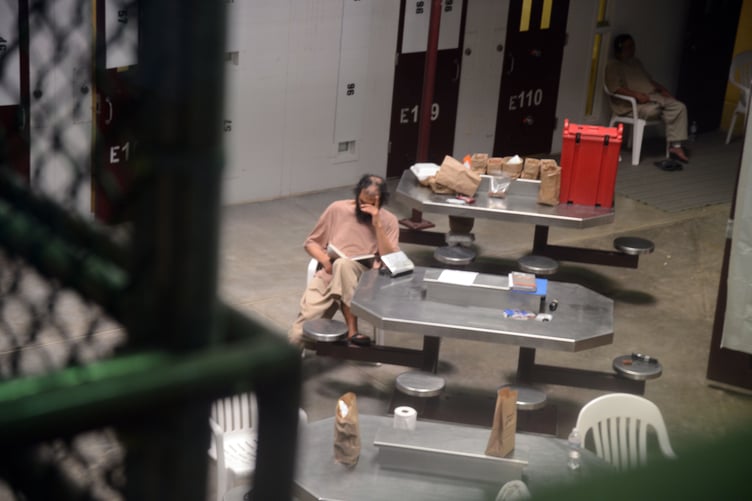
The coldest person – psychologically speaking – I ever met, was a female medial doctor in Guantanamo Bay. In her normal life, she was a pediatrician in Boston. In her National Guard rotation through the prison camps, she oversaw the force-feeding of some 50 prisoners twice a day, every day. I won’t go into the details, but force-feeding is a very brutal process.
I asked her about the Hippocratic oath, to do no harm.
“I am not doing harm,” she said. “The detainees have no rights. They don’t have the right to die. Not under my watch.”
Why am I telling you all this?
I guess, in part because to point out that this publication won’t back down in reporting what needs to be brought into the light of day.
I and your news team won’t be deterred. Dealing with local councils or goons is child’s play. Bring it on.
Comments
This article has no comments yet. Be the first to leave a comment.