
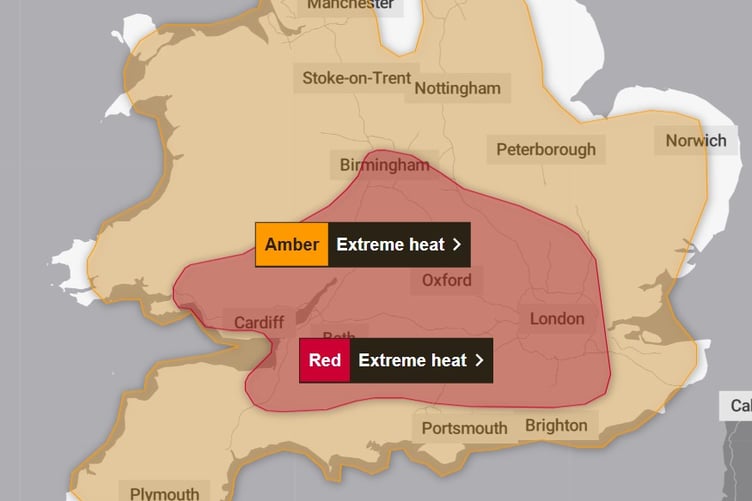
All secondary schools in Carmarthenshire are to close on Wednesday due to forecasted extreme heat.
Posting on social media, Carmarthenshire County Council said: "Due to extreme heat, all secondary schools in Carmarthenshire have taken the decision to close tomorrow and Thursday."
The council added: "Some primaries have informed us of their decision to close. School disruptions is updated by individual schools and are listed on our website - https://schoolclosures.carmarthenshire.gov.wales/
"Please select your school in the drop down menu and click 'View Inset Days / Planned Closures' for information regarding tomorrow and Thursday. They will only appear Green or Red for the day of the closure."



No school closures have been announced in Ceredigion yet, but the council is monitoring the situation.
Waste and recycling crews in Ceredigion will begin their rounds at 6am to avoid the highest temperatures on Wednesday 24 and Thursday 25 June 2026.
Powys Council waste collections will also start earlier at 5am.
Byw'n Iach leisure centres in Gwynedd have announced some class cancellations in the coming days.
Byw'n Iach said: "Due to the current hot weather, and forecasts that temperatures will continue to rise over the coming days, we have decided to cancel a number of fitness classes across the county.
"Each centre will share information about affected classes via its Facebook page/group, website and app. We will also contact customers directly if they have already booked a place in a class that needs to be cancelled.
"We have made this decision in the interests of the wellbeing and safety of our customers and staff."
No school closures have been announced in Gwynedd.Public Health Wales is urging people across Wales to stay safe and check on family, friends and neighbours as a red weather warning for extreme heat comes into force.
While warm weather may be welcome, extreme heat can have serious health impacts. In Wales, where homes and daily routines are not designed for sustained high temperatures, people can become unwell more quickly than they might expect.
Heat-related illness can affect anyone, but older people, babies and young children, and those with underlying health conditions are at greatest risk. People who work outdoors, live in top-floor flats, or are exposed to the heat for long periods may also be particularly vulnerable.
People are advised to:
- Drink water regularly and avoid alcohol, caffeine and sugary drinks
- Stay out of the sun and seek shade as much as possible
- Keep homes cool by closing curtains and windows during the day and opening them at night, when temperatures are cooler
- Wear loose, light clothing and use SPF 30+ sunscreen with at least 4-star UVA protection
- Open water is still really cold, and cold-water shock is very dangerous. If you are using open water to cool off, get in slowly. Use places that are lifeguarded and never swim alone or after drinking or using drugs. In an emergency, remember the lifesaving advice: #FloatToLive.
Even simple actions can save lives. Checking in on a neighbour, friend or relative who may be more vulnerable can make a critical difference during periods of extreme heat.
Babies and young children need extra care. Avoid covering prams or buggies, as this can trap heat. Use lightweight bedding and keep sleeping areas as cool as possible—downstairs rooms are often cooler.
Watch for signs of heat exhaustion. If you or someone else feels unwell during hot weather move to a cool place, rest, and drink water. If symptoms worsen, it may become heatstroke, which is a medical emergency.
People should avoid strenuous activity during the hottest parts of the day and rescheduling exercise, dog walking and errands to the early morning or late evening.
Professor Sarah Jones, Consultant in Environmental Public Health for Public Health Wales, said: “This level of heat can affect anyone, but we know some people are at much greater risk. In Wales, we’re less used to prolonged hot weather, which means it can catch people out. Taking simple steps to stay cool, hydrated and connected to others can prevent serious illness. Checking in on someone could save a life.”
What to do if you feel unwell in the heat
- Tell someone
- Move to a cooler area
- Sip cold water and avoid sugary, alcoholic, hot or caffeinated drinks
- Call NHS 111 for advice or 999 in an emergency
For more advice, visit Public Health Wales’ guide to hot weather.
Comments
This article has no comments yet. Be the first to leave a comment.