

Dolgellau Music Club’s Ben Ridler was delighted to attend the group’s first concert of the new year, and what an opening event it was.
“’Epic’ was one comment, ‘What a journey!’ was another – and that was only at half-time!” he reports.
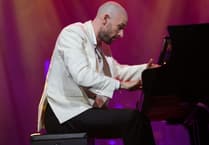
“A full house give pianist John Paul ('JP') Ekins a standing ovation for his recital for Dolgellau Music Club in Coleg Meirion-Dwyfor on Friday, 16 January, an event many said will remain vivid in memory for a long time to come.
“Not for nothing does JP describe himself as 'pianist and storyteller' – his piano-playing in and of itself conjures vivid images and emotions, but in addition he has a gift for prefacing actual performance with lively verbal 'roadmaps' that (complementing programme notes) give listeners the best possible chance of remaining engaged.”
.jpeg?width=209&height=140&crop=209:145,smart&quality=75)


-Ekins.jpeg?width=752&height=500&crop=752:500)
Ben added: “First and foremost, his carefully chosen repertoire has a strong narrative thread, in this case, last piano works by three great keyboard composers, Mozart, Brahms and Schubert.
“Mozart, we were told, composed his D major Sonata K576 just three weeks before his (unanticipated) death at the age of just 35. What is striking is how generally sunny, some yearning in the slow movement apart, the music seems to be. A sparkling performance followed this short introduction, nuanced, but brimming with Mozart's often childlike ebullience.
“Brahms on the other hand was 60 in 1893 when he came to write his Four Pieces for Piano Op.119, a conscious farewell to the instrument. As JP pointed out, giving three of them the title 'Intermezzo' tells us little; a private man, Brahms draws you in towards a hidden centre of loneliness. He told his closest friend Clara Schumann, herself a piano soloist of renown, that the first piece (in B minor) was to be played really slowly, almost as if slowing down in every bar. That shouldn't work – but JP showed how it could, bringing out to the full the piece's latent nostalgia.
“By the time of the vim and vigour of the fourth piece (in E flat major) marked 'Rhapsody', the rhythmic drive and lyrical expansion were all the stronger by way of contrast, and JP put tremendous heart into the set's conclusion which, although (surprisingly) in E flat minor not major, is life-affirming and defiant.
“The second half comprised just one piece, Schubert's immortal 1828 B flat major Sonata D960, written in the last months of his life. We were warned that the opening movement alone takes 20 minutes, an instance (in Schumann's phrase) of the 'heavenly length' of Schubert's music. "Some people say it's too long!" – not a bit of it insisted JP, mapping out what lay ahead, the gorgeous expansive melody repeating and transforming itself, undercut by an ominous, growling trill in the bass.
“Schubert had been struggling with illness (and painful treatments) for some years; a life-and-death struggle is undoubtedly underway. But the third movement scherzo is all Viennese lightness and grace, and the fourth too has long passages of tripping delicacy. JP made all these moods and timbres count, and held his audience spellbound every step of the way. The coleg's Bechstein too played its part, holding up valiantly even in the final, furious presto. ("It'll need an oil-change afterwards!" said one.)
“Drained but satisfied, listeners felt grateful for having been touched, and stretched, in a way only music such as this can achieve. D960 is a piece JP has clearly played many, many times, yet it felt as if it was being created anew, and for this too the audience expressed deep gratitude.”
Comments
We've recently changed our login process. If you have an account for commenting, you will need to re-register on the login window.
This article has no comments yet. Be the first to leave a comment.