
THE town of Cardigan is situated on the tidal side of the Teifi River on the border with Pembrokeshire with a population of around 4,200.
It is a town full of history and culture and deserves an hour or two while enjoying the National Eisteddfod in Llantwd which is less than four miles away.
Cardigan has a wide range of interesting shops and businesses and the High Street has won acclaim for its diversity.
Three years ago, it was named by The Times newspaper as one of the most beautiful places to do Christmas shopping, and was praised for reversing the trend of high streets suffering due to the economic climate.
Businesses have come together to create a map and leaflet of special offers for this year's Eisteddfod to encourage people to come to the town.
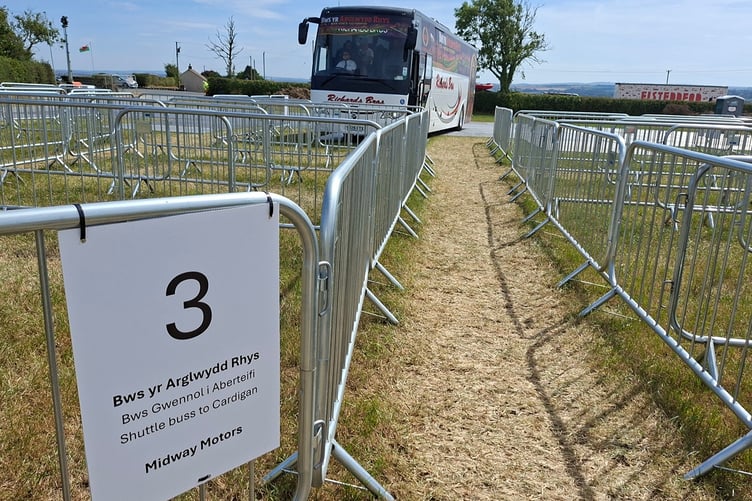
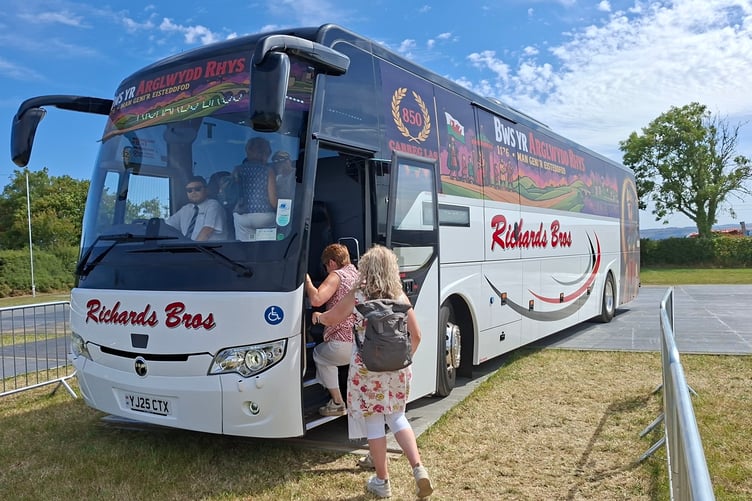
They have also arranged for a shuttle bus to run from Maes to Cardigan throughout the Festival to facilitate the visits.
Cllr Clive Davies, Ceredigion County Council's Cabinet Member for the Economy and Regeneration said that the bus was fully funded by Ceredigion County Council.
"I am very pleased that we can offer this service during the Eisteddfod.
"It provides an easy way for people to travel to the Maes, also giving an opportunity to visit Cardigan during this special year which marks 850 years since the first Eisteddfod was held at Cardigan Castle, as well as supporting the local businesses that make Cardigan so special.




"There is plenty to see and do in Cardigan, the castle and the river, the cafes and restaurants and of course the town's shops," he said.
He explained that the map, drawn up especially for the Eisteddfod by Lisa Hellier and funded by 4CG, a non-profit organization dedicated to strengthening the local economy, protecting heritage and promoting culture in Cardigan, also contains special offers for Eisteddfod-goers.
"There are numbers on the map that correspond to businesses in the town and their details are on the back of the leaflet.
“There are offers throughout the week, giving visitors a warm welcome at the same time," he said.
He added that the bus, named the Lord Rhys Bus, runs every hour from seven in the morning until midnight from Finch Square to the Eisteddfod Field.
"The bus will leave Cardigan on the hour and from the Maes back to the town on the half hour.
"The bus is free and there is no need to book a place on the bus, and there is a lift for wheelchair users so there is no excuse not to come along and explore one of the loveliest towns in west Wales," said Clive.
A castle was established in what became the town of Cardigan by the Anglo-Normans in 1110.
Cardigan was captured by the Welsh around 1165, and the stone castle was rebuilt by Rhys ap Gruffudd around 1171.
"Here Rhys held a gathering of poets in 1176, an event later recognised as the first eisteddfod," says Clive, "a weekly market was established in 1277, and a borough charter was granted in 1284."
Cardigan gave its name to the historic county of Ceredigion, which was founded in 1283.
t became the administrative center for the county and Cardigan Castle was used as a court of law and prison until it was replaced by the new County Hall in 1764, and the county jail in 1793.
The prison was designed by John Nash.
"The town, which has always been involved in maritime trade, was a successful port from the seventeenth century until the beginning of the twentieth century.
“At its height the Port of Cardigan had jurisdiction over Newport-Bach, Fishguard, Aberaeron, Aberporth and New Quay, and around 300 ships were registered here," added Clive.
The town is no longer the administrative centre of the county, as Ceredigion County Council is based in Aberaeron, but the council maintains offices in Cardigan.
Comments
This article has no comments yet. Be the first to leave a comment.